Once your baby starts crawling, travel stops being about carrying a passenger and starts being about managing an explorer. The trip itself doesn't change — the same train journeys, family visits, and temple trips you've always done — but every room you land in now needs a quick safety check before you set baby down.
Not medical advice — consult your pediatrician before travel, especially for flights or long trips.
Why This Stage Is Different
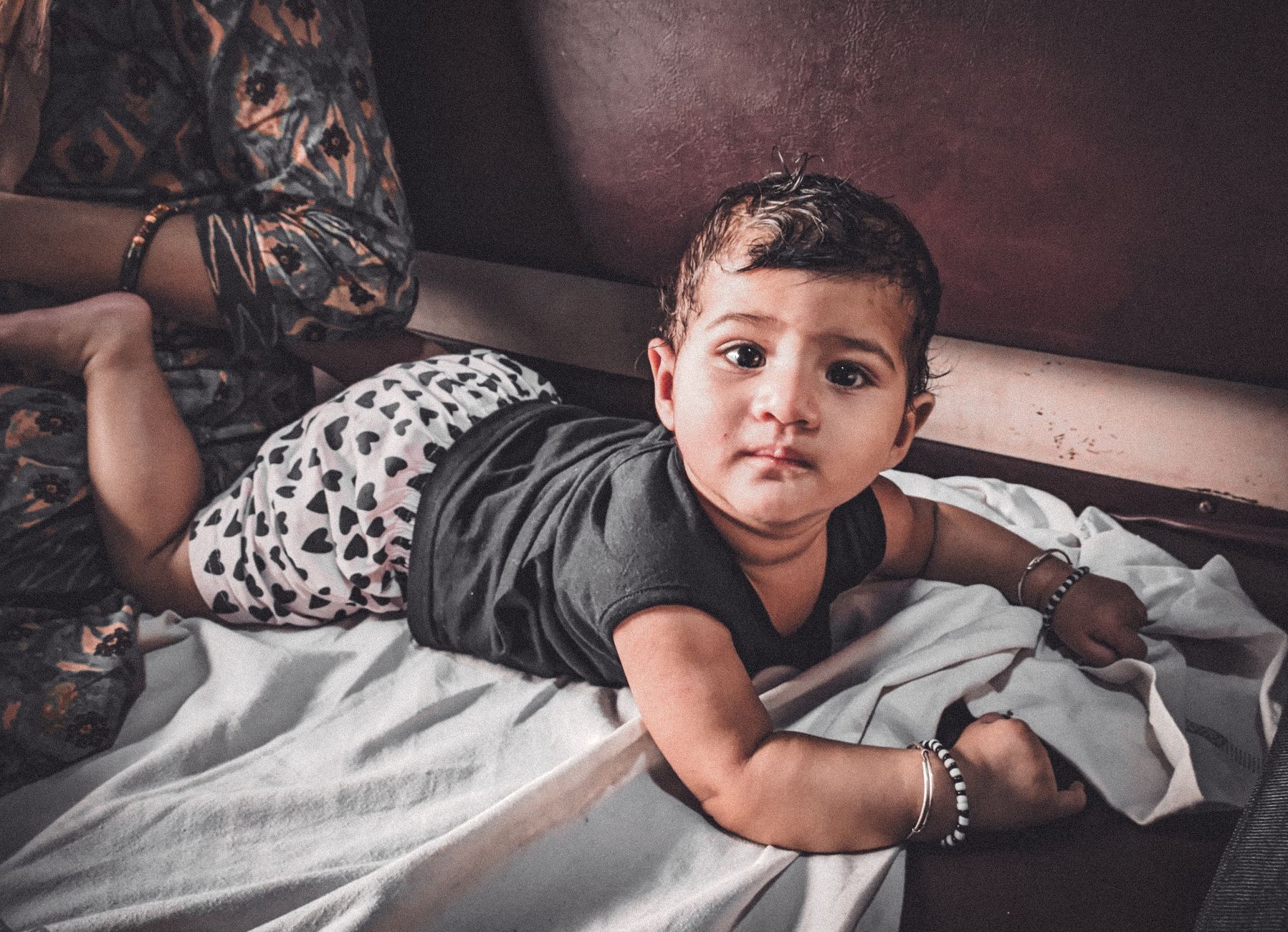
A newborn stays wherever you put them. Once your baby can crawl, they cover a room fast and pull up on anything within reach. That changes your arrival routine — you're now scanning every unfamiliar space (a relative's living room, a hotel room, a dharamshala near a temple) for hazards before your baby gets floor time.
Babyproofing Wherever You Land
You can't childproof someone else's home in advance, so build a two-minute check into every arrival.
Anchor tall furniture first. HealthyChildren.org (AAP) advises that you "secure all furniture and mirrors with anti-tip devices," even noting this may require relocating furniture so the anchor can reach a wall stud. At a relative's home or hotel, that's not always practical — so instead, physically block your baby's crawling path away from bookshelves, dressing mirrors, and side tables that aren't fixed to the wall.
Sweep the floor before crawling starts. HealthyChildren.org (AAP) explains that "babies and toddlers are at the highest risk" of choking "because they love to explore the world by putting things in their mouths, which can then get stuck in their small airways." Unfamiliar rooms — especially a grandparent's house with coins, medicine strips, or small puja items on low tables — need this sweep every single time, not just once at the start of the trip.
Pack a compact travel outlet-cover and corner-guard set; it takes two minutes to fit the room you're actually staying in rather than assuming it's already safe.
Car Seats and Road Trips
The car seat rules don't loosen just because your baby can now sit up and look around more. The AAP (via HealthyChildren.org) recommends that "all infants and toddlers should ride in a rear-facing seat as long as possible until they reach the highest weight or height allowed by their car safety seat manufacturer" — at 8 months, that's almost certainly still every long-distance drive or highway trip to see family.
If you're hiring a cab or self-driving, carry your own rear-facing seat rather than relying on what's available at the other end; most Indian rental cars and taxis won't have one on hand.
Flights With a Mobile Baby
Boarding gets a little harder once your baby wants to move rather than sleep through the flight, but the core in-flight advice is unchanged. HealthyChildren.org (AAP) advises that "having babies drink from the breast or a bottle or suck on a pacifier during takeoff and landing can ease discomfort" from cabin pressure changes — worth timing a feed around those two windows rather than mid-cruise.
Between takeoff and landing, expect to spend a chunk of the flight keeping your baby occupied in your lap or the bassinet, since a crawler resists being still for long stretches.
For most healthy babies, flying itself isn't a medical concern at this age. The exception is a baby with an existing heart or lung condition: the CDC Yellow Book (via NCBI Bookshelf) states that "children with chronic heart problems, lung problems, or sickle cell disease might be at risk for hypoxia during flight, and caregivers should consult a healthcare professional before travel." If that doesn't describe your baby, no separate health clearance is needed to fly.
If a routine vaccine dose falls during your travel dates, you don't need to choose between the trip and the shot. The CDC Yellow Book (via NCBI Bookshelf) advises that "doses can be administered at the minimum ages and dose intervals to facilitate completion of a series before travel" — ask your pediatrician about bringing the dose forward slightly rather than pushing the trip back, and flag it if you'll be away past the usual follow-up window.
Naps and Sleep on the Move
Long travel days mean a lot of napping in car seats, strollers, and laps — but the safe-sleep rule doesn't pause for travel. The AAP's safe sleep guidance (via HealthyChildren.org) states that "if your baby falls asleep in a car seat, stroller, swing, infant carrier or sling, you should move them to a firm sleep surface on their back as soon as possible." On a train or at a relative's home, that means transferring baby to a proper cot or a firm mattress rather than letting a stroller nap run long.
Temples, Mannat Visits, and Family Gatherings
Crowded temple visits and mannat trips bring their own mix of new faces and open water.
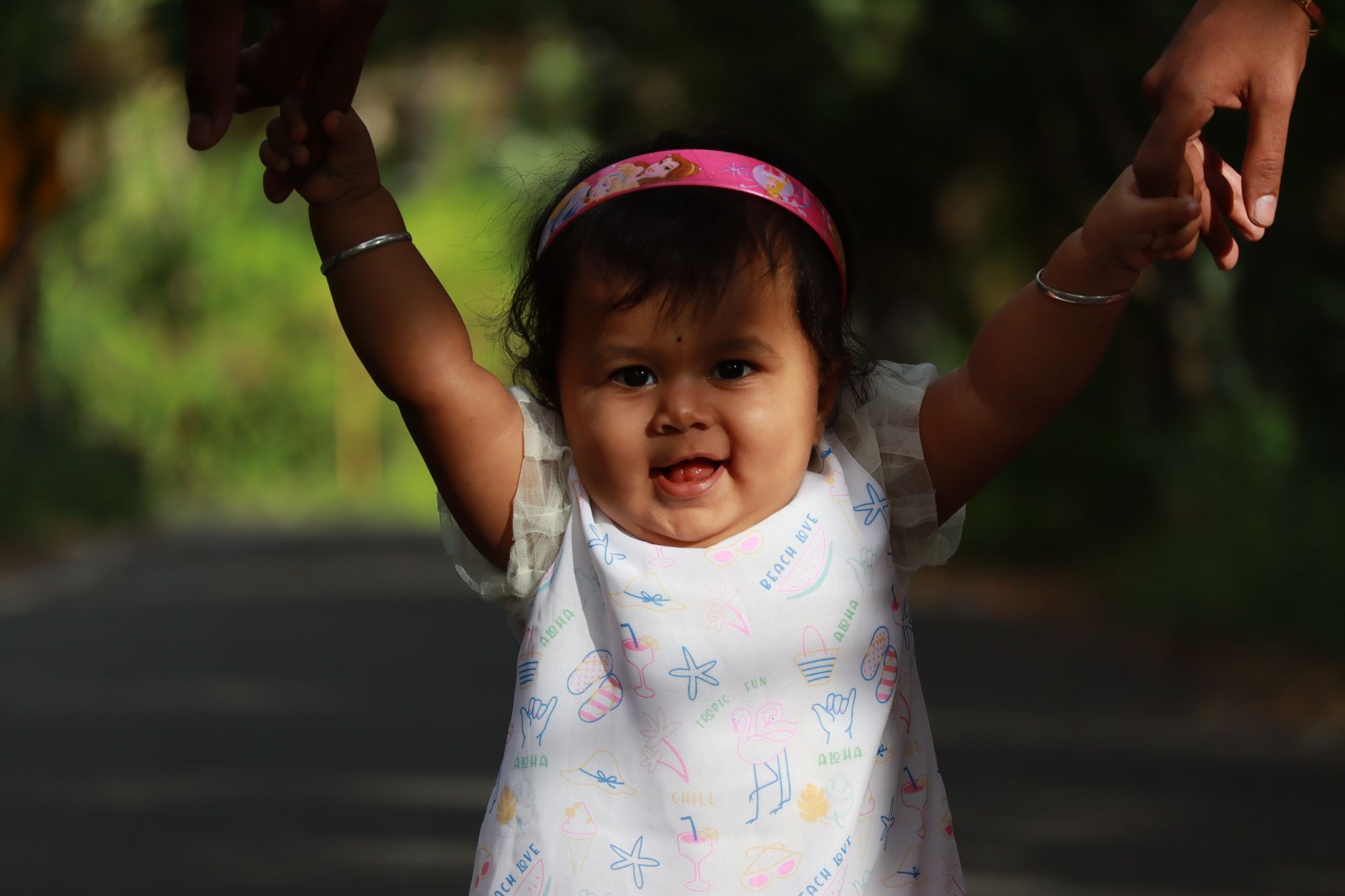
Stranger anxiety is normal here, not a problem to fix. A crawling baby clinging to you around unfamiliar relatives or a packed temple courtyard is a developmental stage. HealthyChildren.org (AAP) explains that around this age, your baby is "now, for the first time, able to tell the difference between familiar and unfamiliar situations" — so the clinginess at a crowded darshan or a house full of visiting relatives is a sign of normal development, not something to discourage.
Stay within arm's reach near water. Temple tanks, stepwells, and pools at family resorts are common stops on these trips. The AAP (via HealthyChildren.org) recommends "staying within arm's length, providing constant 'touch supervision,' whether it's bath time or swim time" — treat any temple tank or open water on the trip the same way you would a home bathtub.
Heat, Sun, and Bugs
Most Indian trips mean real outdoor time, and a crawler on the ground is more exposed than a baby in a carrier.
HealthyChildren.org (AAP) notes that "kids have lower sweat rates than adults," which means babies overheat faster than adults in the same conditions — worth remembering on a midday platform wait or a car with the AC off. Keep travel days shaded where possible and offer fluids often.
Watch your baby's diaper count on a long, hot travel day — it's an early warning sign that's easy to track even while you're on the move. HealthyChildren.org (AAP) notes that infants "urinate less frequently (for infants, fewer than six wet diapers per day)" when dehydration is starting to set in — if you notice that drop-off, offer fluids right away and check in with a doctor if it doesn't turn around.
For sun exposure at outdoor stops, HealthyChildren.org (AAP) recommends using "a broad-spectrum sunscreen with a sun protection factor (SPF) of at least 15 (up to SPF 50)," reapplied roughly every two hours during the day out.
For mosquitoes on evening walks or at outdoor family functions, HealthyChildren.org (AAP) notes that "10% DEET provides protection for about 2 hours, and 30% DEET protects for about 5 hours" — so match the concentration to how long you'll actually be outside rather than reaching for the strongest bottle by default.
Travel Gear Worth Packing
| Item | Why it helps at this stage | Price Range | Where to Buy |
|---|---|---|---|
| Travel outlet covers + corner guards | Quick babyproofing for any unfamiliar room | Rs. 200 – Rs. 500 | Amazon.in |
| Portable travel cot / bassinet | A firm, familiar sleep surface away from home | Rs. 2,500 – Rs. 6,000 | FirstCry |
| Broad-spectrum baby sunscreen (SPF 15-50) | Reapply every 2 hours on outdoor stops | Rs. 300 – Rs. 700 | Amazon.in |
| Baby-safe DEET repellent (10-30%) | Match strength to time spent outdoors | Rs. 150 – Rs. 400 | FirstCry |
| Compact rear-facing car seat | Non-negotiable for road trips at this age | Rs. 6,000 – Rs. 15,000 | Amazon.in |
Frequently Asked Questions
Do I still need a car seat now that my baby can sit up on their own? Yes. The AAP recommends staying rear-facing until your baby reaches the seat's maximum weight or height, regardless of how well they can sit or hold their head up. Sitting ability isn't the deciding factor.
Is it normal for my baby to cry around grandparents they haven't seen in months? Yes. HealthyChildren.org (AAP) describes this stranger-anxiety stage as a sign your baby can now distinguish familiar from unfamiliar people — it usually eases within the first hour or two of contact as they warm up.
My baby fell asleep in the stroller during a temple visit — do I need to move them? Yes, as soon as you reasonably can. The AAP's safe sleep guidance recommends moving a baby who's fallen asleep in a stroller, car seat, or carrier to a firm, flat surface on their back.
How do I babyproof a hotel room I'm only in for one night? Focus on the two highest-yield checks: block access to unanchored furniture your baby could pull over, per AAP guidance, and do a floor-level sweep for small objects before letting your baby crawl, per AAP's choking-prevention guidance. Both take under two minutes.
What sunscreen strength should I pack for a hill-station or beach trip? The AAP recommends broad-spectrum SPF 15 to 50, reapplied roughly every two hours outdoors — pack one bottle and reapply on a schedule rather than relying on one morning application to last the whole day trip.