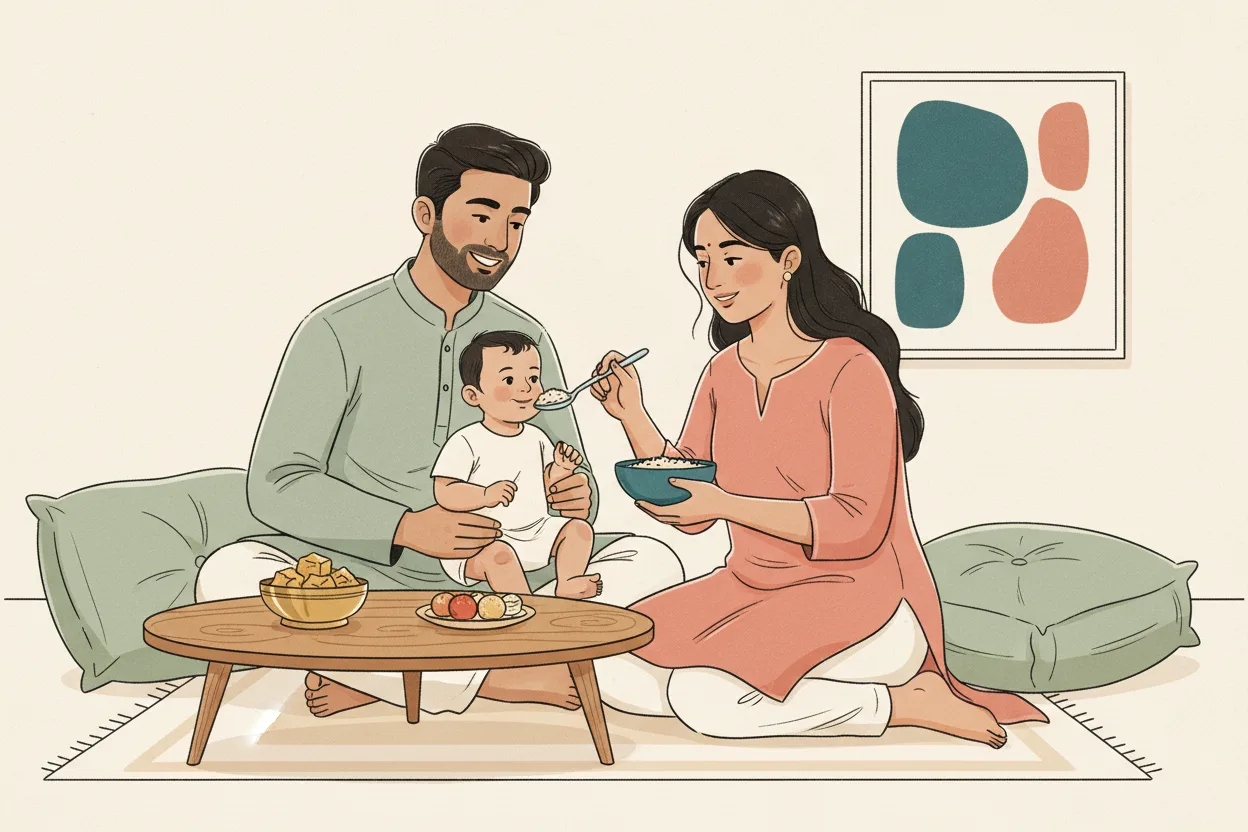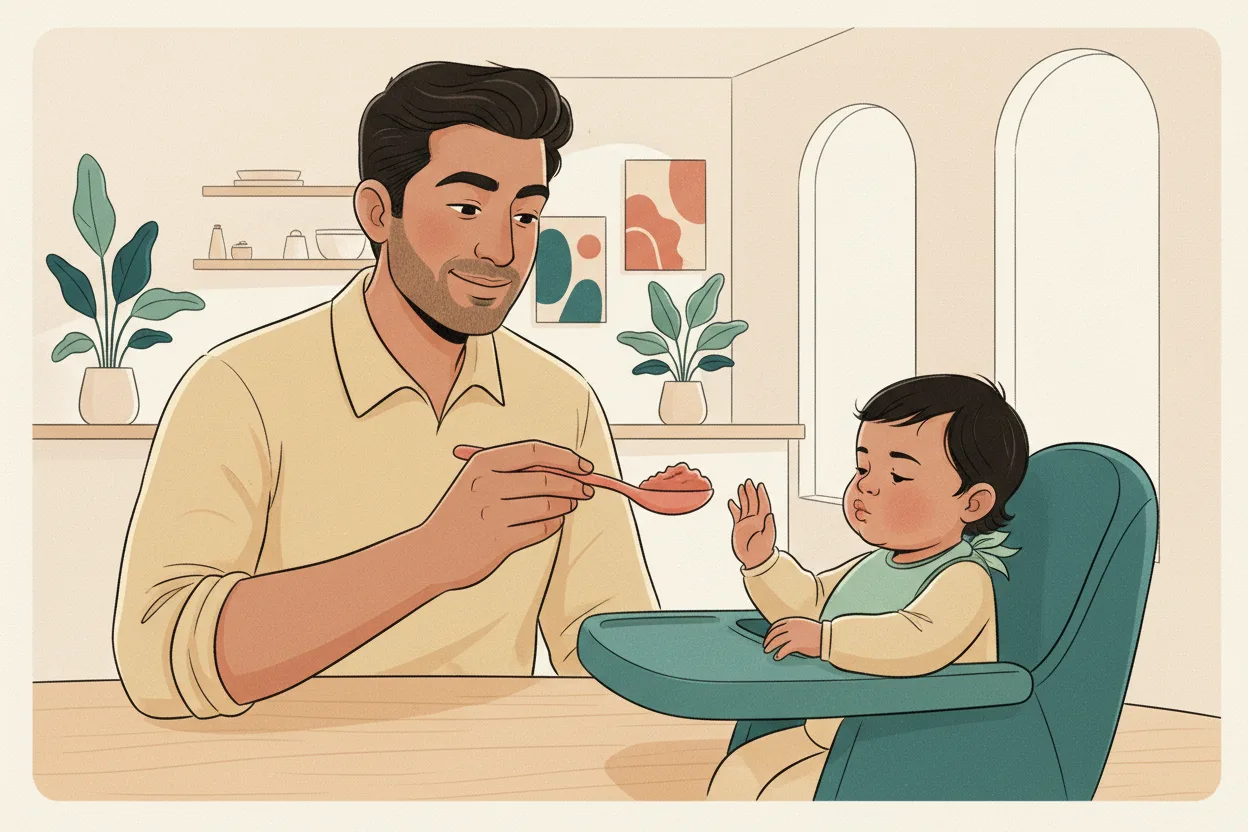

The NHS confirms that plain, full-fat yoghurt can be given from around 6 months of age — making it one of the earliest and most practical dairy options for an Indian baby. The one non-negotiable: no added sugar, no flavourings.
Not medical advice — consult your pediatrician before introducing new foods.
When to Start: The 6-Month Mark
The 2023 WHO Guideline for Complementary Feeding is the global standard: infants should be introduced to complementary foods at 6 months (180 days) while continuing to breastfeed. Plain curd fits neatly into this timeline.
There is one important distinction with dairy. The CDC advises that drinking cow's milk as a main drink is not recommended until your child is older than 12 months — but other cow's milk products, such as yogurt without added sugars, can be introduced before 12 months. So plain curd from 6 months is fine; cow's milk as a drink in place of breast milk or formula is not.
Why Curd Is One of the Best Weaning Foods
Dairy is nutritionally dense at exactly the stage babies need it most. According to the WHO's model chapter on infant and young child feeding, dairy products including yoghurt are useful sources of calcium, protein, energy, and B vitamins — a strong nutritional case for including curd early in a weaning plan.
That calcium intake matters. NIH dietary reference data sets the adequate intake (AI) of calcium for infants aged 6 to 12 months at 260 mg per day. A small katori of plain curd contributes meaningfully toward this target alongside breast milk or formula.
Beyond the numbers, curd has practical advantages for Indian kitchens: it is made fresh at home from full-cream milk, needs no cooking, has a soft texture babies accept easily, and combines well with mashed banana, soft-cooked rice, and pureed vegetables.
Homemade Curd vs. Packaged Greek Yogurt
This is the question most Indian parents face once they start looking at options. Here is how the two compare:
| Homemade full-fat curd | Packaged Greek yogurt (e.g. Epigamia plain) | |
|---|---|---|
| Fat content | Full-fat (use full-cream milk) | Full-fat version available |
| Added sugar | None if you make it yourself | Check label — flavoured variants contain sugar |
| Live cultures | Yes (from the starter) | Yes (labelled "live active cultures") |
| Convenience | Needs planning ahead | Ready to open |
| Cost | Very low | Rs. 40–Rs. 80 per cup |
| Safe for babies? | Yes — plain, full-fat | Only the plain unsweetened full-fat variant |
The bottom line: Homemade full-fat curd made with full-cream milk (Amul, Mother Dairy) is the most straightforward option — you control exactly what goes in. If you use a packaged variety, choose only the plain, unsweetened, full-fat version. Epigamia's "Plain" or "Original" Greek yogurt with no added sugar is fine for babies. Their strawberry, mango, and blueberry variants are not — they all contain added sugar.
The Added-Sugar Rule: Why It Matters
The American Academy of Pediatrics (AAP) is direct: avoid serving foods and drinks with added sugar to children under 2 years of age. Flavoured yogurt falls squarely in this category — fruit-layer Greek yogurt, strawberry curd, and honey yogurt are all unsuitable for babies and toddlers under 2.
The 2023 WHO Complementary Feeding Executive Summary reinforces this: flavoured or sweetened milks should not be used for infants. The same principle applies to flavoured yogurts.
If your baby wants something sweeter, stir a small amount of ripe mashed banana or soft-cooked fruit into plain curd. The natural sugars in whole fruit are different from added sugar and are fine.
How to Serve Curd During Weaning
Start with one to two teaspoons alongside other complementary foods. Practical combinations that work well:
- Mashed ripe banana stirred into plain curd
- Soft-cooked apple or pear pureed into curd
- Curd rice — soft rice mixed with plain curd (full-fat plain dairy is suitable from around 6 months, and this is one of the most traditional first meals in South Indian weaning)
- Plain curd served on its own in a small katori with a soft spoon
Increase the portion gradually as your baby's appetite grows. The NHS confirms that babies do not need salt or sugar added to their food — salt is not good for their kidneys. Keep curd plain at this stage; no salt, sugar, or spices.
Which Brands and Products to Look For
| Product | Price range | Where to buy |
|---|---|---|
| Full-cream milk (Amul Taaza / Mother Dairy) for homemade curd | Rs. 25–Rs. 35 per 500 ml | Local dairy / supermarket |
| Epigamia Plain Greek Yogurt | Rs. 50–Rs. 80 per 90 g cup | Amazon.in / FirstCry |
| Nestle a+ Plain Curd | Rs. 20–Rs. 30 per 100 g | Amazon.in |
| Go Cheese Set Dahi | Rs. 25–Rs. 40 per 100 g | Amazon.in |
Label check before buying: Look at the ingredients list on any packaged yogurt. If you see sugar, cane sugar, fructose, glucose syrup, fruit concentrate, or any sweetener, the product contains added sugar and is not suitable for babies. You want a plain product with milk and live cultures only.
Frequently Asked Questions
Can I give curd before 6 months? No. The 2023 WHO guideline specifies that all complementary foods, including curd, should begin at 6 months (180 days). Before that point, breast milk alone provides everything your baby needs.
Should I use full-fat or low-fat curd? Full-fat. The NHS specifies full-fat dairy products as the appropriate choice from 6 months of age. Babies need fat for energy and brain development — low-fat or skimmed options are not recommended for this age group.
Is Epigamia Greek yogurt safe for my 7-month-old? Only the plain, unsweetened, full-fat variant. The AAP advises avoiding added sugar for children under 2, and Epigamia's flavoured variants all contain it. The plain version — confirmed by reading the ingredients label — is safe.
What about curd rice for a 6-month-old? Yes. Curd rice (soft rice mixed with plain curd) is one of the most traditional weaning foods in South India. The NHS confirms that full-fat plain dairy products are suitable from around 6 months. Keep it soft and thin, with no salt or spices.
Can I add sugar or honey to curd to make it more palatable? No. The AAP recommends avoiding added sugar entirely for children under 2. Honey carries an additional risk: the CDC warns that honey given to children younger than 12 months may cause a severe food poisoning called botulism — do not give honey to babies before their first birthday. For natural sweetness, stir in a little ripe mashed banana or cooked fruit instead.
My baby doesn't seem to like the sourness of plain curd — what should I do? Start by mixing a tiny amount of curd into a food your baby already enjoys, such as mashed banana or pureed mango. Increase the curd proportion gradually. Repeated exposure to a new flavour is how babies learn to accept it.