
Most babies do not sleep for 10 uninterrupted hours in the first year, and the AAP is explicit that this is normal — a baby who wakes and resettles is a healthy sleeper, not a problem to fix. "Sleeping through the night" arrives gradually, over months, not on a fixed date.
Not medical advice — consult your pediatrician about your baby's specific sleep pattern.
What "Sleeping Through the Night" Actually Means
The phrase gets used loosely, and it sets parents up to worry for no reason. The AAP states plainly: "It is not a child who sleeps without waking for 10 hours at night. Sleeping undisturbed for prolonged periods at this age is not healthy." In other words, the goal isn't a baby who never stirs — it's a baby who wakes, resettles (with or without your help), and gets enough total sleep across the 24-hour day.
Part of why early "sleep training" advice doesn't apply to newborns is biological. The AAP notes that "babies do not have regular sleep cycles until about 4 months of age." Before that age, there is no consistent pattern to shape — which is exactly why most guidance on helping a baby self-settle starts at the 4-month mark, not in the newborn weeks.
A Realistic Timeline, Month by Month
There's no single date "sleeping through" happens, because it isn't one event — it's a gradual lengthening of stretches as your baby's brain and stomach capacity mature. Use this as a range, not a checklist.
| Age | What's typical |
|---|---|
| 0–3 months | Frequent waking every 2–4 hours for feeds. No regular sleep cycle yet — waking this often is expected, not a problem. |
| Around 4 months | Longer stretches may appear, then often scramble again — a well-documented "sleep regression" tied to brain development, not a step backward. |
| 4–12 months | Sleep needs are highest of any life stage; frequent-but-shorter night wakings are still common and normal. |
| Under 12 months (any point) | A majority of babies still don't sleep more than about 4 hours at a stretch. |
The 4-month wobble is normal, not regression in a bad sense. Sleep Foundation explains that "at around 4 months, a baby's brain and body are developing rapidly, and the process of forming and linking different areas of the brain and nervous system may create instability in sleep." If your baby was starting to string together longer stretches and then suddenly isn't, this is very likely why — it tends to pass as the new sleep-cycle structure settles in.
Total sleep matters more than one long stretch. The American Academy of Sleep Medicine consensus statement recommends that "infants 4 months to 12 months should sleep 12 to 16 hours per 24 hours (including naps) on a regular basis to promote optimal health." A baby getting that total across day and night sleep is doing fine, even if the longest single night stretch is only 4–5 hours.
Frequent waking well past the newborn stage is common, not a red flag. A study in a peer-reviewed journal (PubMed Central, Norwegian breastfed-infant cohort) found that "the median frequency of night waking among 6–8 month old infants was three (range 0–15), while the median frequency among 9–12 month old infants was four (0–15) episodes." So a 9-month-old waking four times a night is squarely typical for a breastfed baby, not unusual.
You are not the only tired parent in your building. NHS guidance notes that "59% of parents with babies under 12 months old say their baby sleeps for less than 4 hours at a time." If your baby hasn't hit a long stretch yet, the majority of babies their age haven't either.
Safe Sleep Comes First, However Long the Night Feels
Whatever stretch your baby is currently sleeping, the sleep setup matters more than the length of it.
AAP safe-sleep guidance states that "babies who sleep on their backs are much less likely to die suddenly and unexpectedly than babies who sleep on their stomachs or sides." Back to sleep, every time, for every nap and every night — including when a sleepy grandparent or a night-shift dad is the one putting baby down.
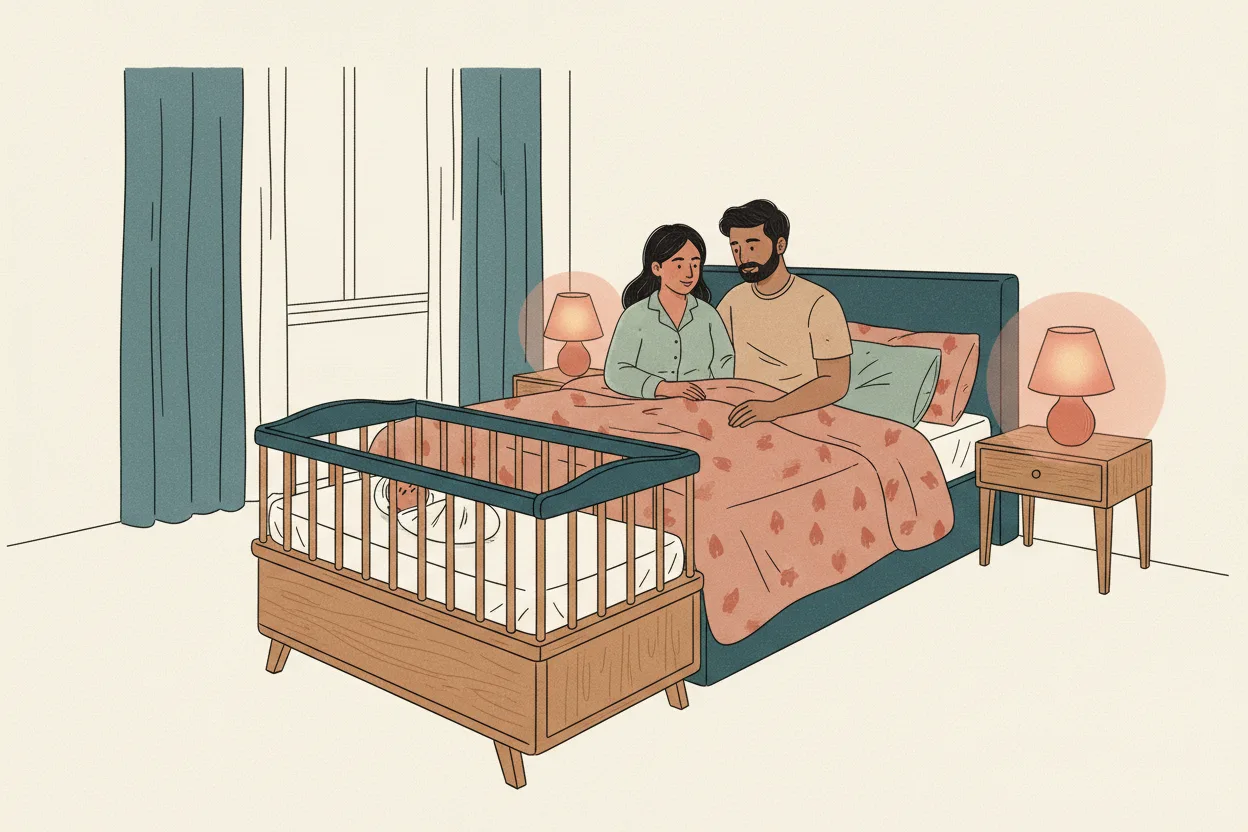
For where baby sleeps, AAP recommends that "parents sleep in the same room – but not in the same bed as a baby, preferably for at least the first six months." A crib or bassinet next to your bed — your own room, your own space — gives you the reach-over convenience of night feeds and check-ins without sharing a sleep surface.
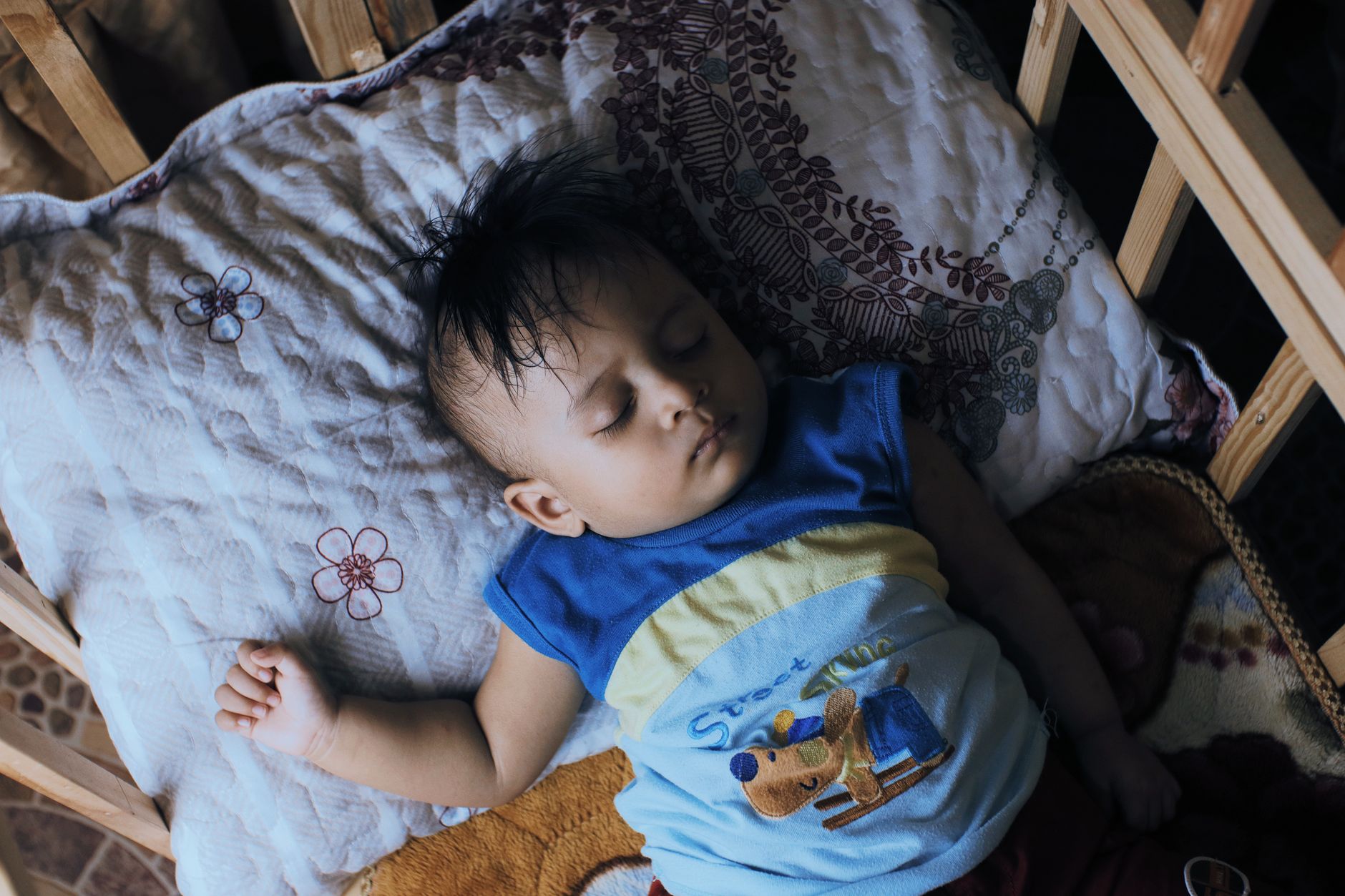
Two habits that are common in Indian homes are worth rethinking. First, keeping a cap on baby indoors or over-wrapping in blankets: NICHD's Safe to Sleep guidance states that "baby can get hot or overheated if they are wearing too many layers of clothes and bedding for the room temperature (sometimes called overbundling)," and that "wearing hats while indoors can make baby too hot, so take off baby's hat when inside." A well-meaning grandparent's insistence on a cap and extra layers indoors can work against you here — one light layer, hat off, is the safer default. Second, soft bolsters or pillows placed around baby in the crib: the AAP states that "pillows, quilts, comforters, sheepskins, bumper pads and stuffed toys can cause your baby to suffocate." A bare, firm mattress with just a fitted sheet is the safest crib, however empty it looks.
How Feeding Method and Your Home Setup Change the Picture
If you're breastfeeding, frequent night feeds are part of how supply stays established in the first year — a breastfed-infant cohort study found a median of three to four wakings a night between 6 and 12 months, so this is expected, not a sign anything is wrong with your milk or your baby. If your partner is doing an expressed-milk feed at 3am so you can sleep, that's a legitimate way to split the load — both parents can be on night-feed duty.
With baby's crib next to your bed but relatives also home, a simple household rule helps: the two of you handle night wakings for the first few months, so baby learns your voice and touch as the resettling cue, and everyone else gets a full night's sleep. In a multi-generation home where grandparents pitch in during the day, that daytime support often does more for how rested you feel than any change to baby's own night pattern.
What Can Help (Without Changing Baby's Biology)
You can't rush a baby's sleep-cycle maturity, but a calm, consistent environment makes the wakings you do get easier to manage.
| Product | Why it helps | Where to buy |
|---|---|---|
| White noise machine | Masks household sounds (doorbell, traffic, other family members) so a stirring baby is more likely to resettle alone | Amazon.in |
| Blackout curtains | Keeps early sunrise and street light from cutting naps and early-morning waking short | Amazon.in |
| Wearable sleep sack / swaddle | A safe, loose-blanket-free way to keep baby warm on the back, appropriate for Indian bedroom temperatures | FirstCry |
| Bedside bassinet/co-sleeper crib | Its own firm, flat surface right next to your bed, for room-sharing without bed-sharing | FirstCry |
Frequently Asked Questions
Is it normal for my 8-month-old to still wake up at night? Yes. A peer-reviewed study of breastfed infants found a median of three night wakings at 6–8 months and four at 9–12 months. Waking at 8 months is common, not a setback.
My baby was sleeping longer stretches and now wakes more at 4 months. What happened? Sleep Foundation explains this is tied to rapid brain and nervous-system development around this age, which can temporarily destabilize sleep. It usually resolves as your baby's new sleep-cycle structure settles.
How much total sleep does my baby need in a day? The American Academy of Sleep Medicine recommends 12 to 16 hours across 24 hours, including naps, for babies 4 to 12 months old. Focus on that total rather than the length of any single stretch.
Should the baby's crib be in our room or a separate nursery? AAP recommends room-sharing but not bed-sharing for at least the first six months — baby's own crib or bassinet, in your room, on its own surface.
Can we try sleep training before 4 months? Most approaches aren't effective that early because babies don't yet have regular sleep cycles, per the AAP. Around 4 months onward is when a consistent bedtime routine starts to have real traction.
Does breastfeeding mean my baby will wake more than a formula-fed baby? Night feeds are a normal part of how breastfeeding supply stays established in the first year, and frequent short wakings are common for breastfed babies specifically — see the timeline above for what's typical at each age. It isn't a sign of a supply or sleep problem.