Two mothers asked within days of each other. One wanted to know whether others had been through "the six week sleep regression", and when babies start sleeping longer. The other had a five-week-old on formula who had taken three short naps in two days, slept only on her, and fed almost constantly — and she was careful to say he had plenty of wet nappies, fed well, and was not crying or cranky. She was the one at breaking point. We went looking for a named six-week regression and did not find one: a title-and-abstract search of PubMed for the exact phrase returns no records at all, and reports the phrase as absent from its index. That is a statement about the label, not about her week.
Not medical advice — consult your pediatrician about your baby's specific health needs.
What we searched, and what came back
The precise wording matters, so here it is: we found no clinical description of a named regression at this age in the sources we could reach. That is a smaller and more defensible claim than "it is a myth". Searched as a phrase in titles and abstracts, "sleep regression" returns zero papers — the index does not hold the term. A looser search returns tens of thousands of hits, but only because it matches "sleep" and "regression" separately, and most of those are statistical regression. We also searched the parent-facing guidance of the AAP, the NHS, the CDC, the WHO and the Indian Academy of Pediatrics for the term and found no page describing a regression at this age.
Where the framing does live is consumer sleep publishing and sleep-consultant blogs. It is worth noticing that even the fullest parent-facing account of named regressions, the Sleep Foundation's, begins at four months and says plainly that "not all babies" have one, citing "a considerable amount of individual variation in infant sleep". Four months is a genuinely described shift, and we cover the four-month regression separately. Six weeks is not on that list.
What genuinely does happen around five to six weeks
Three well-documented things converge here. None of them is a regression, and all of them are real.
Crying is at its maximum. This is the big one, and it lands exactly on the mark. A 2022 systematic review and meta-analysis in Child Development pooled fifty-seven studies of parent-reported crying across seventeen countries and put "the traditional cry 'peak'" at age five to six weeks, with a pooled cry-and-fuss duration of about 126 minutes a day — though it noted high variation between babies, and that crying "remains substantial in the first year of life, after an initial decline". The clinical description matches: the AAP's guidance on infant fussiness says the length of normal fussing "usually peaks at about 3 hours a day by 6 weeks old", then falls to one or two hours a day by three to four months. If the fussing is concentrated in the evening, that is the witching hour.
Feeding steps up, and nights with it. The NHS says cluster feeding — wanting to feed "even more frequently (sometimes constantly)" — is normal in the first three to four months, can happen "during the day or night (or a bit of both)", and often runs for a few days during a growth spurt. Crucially for a formula-fed baby: the same page says you can cluster feed formula, while warning against overfeeding. Constant feeding at five weeks is not a sign the milk has stopped working.
Sleep is still disorganised, not consolidating. A baby this age is not losing a skill, because the skill has not arrived. A study in Chronobiology International found that the regular alternation of sleep states only stabilises at about three months, when infants "convert from a polyphasic sleep/wakefulness pattern to a circadian one", with short sleep periods lengthening and gathering into the night. Three scattered naps across two days is what polyphasic looks like from the inside. What is normal at this stage is set out in newborn sleep from zero to three months.
Why the honest answer changes what to do
If this were a discrete regression, the advice would be to wait it out and expect the old pattern back. It is not. It is three normal processes near their peak, and that points somewhere different: support the parent, rather than try to fix the baby. There is also no sleep-training question here. Training presumes a pattern to return to, and on the same Chronobiology International findings, the regular sleep-state pattern has not stabilised yet at this age.
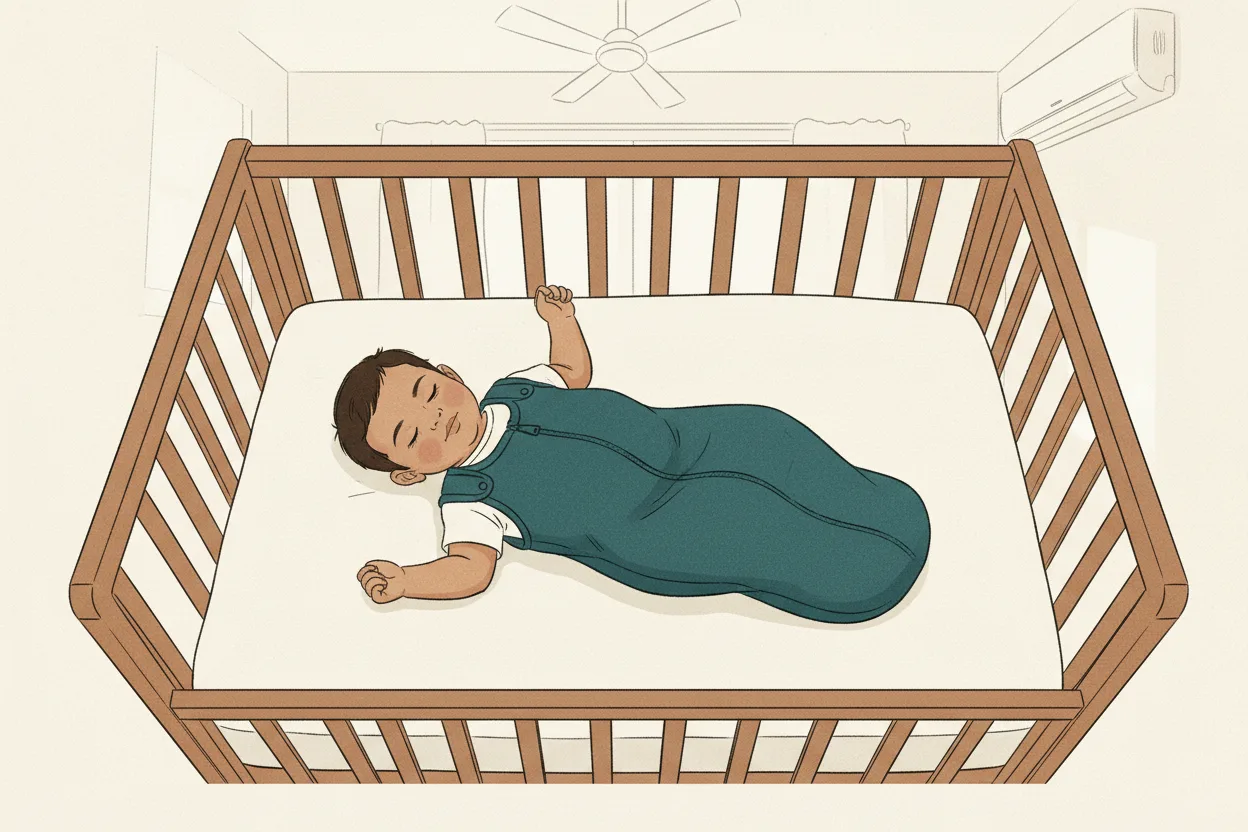
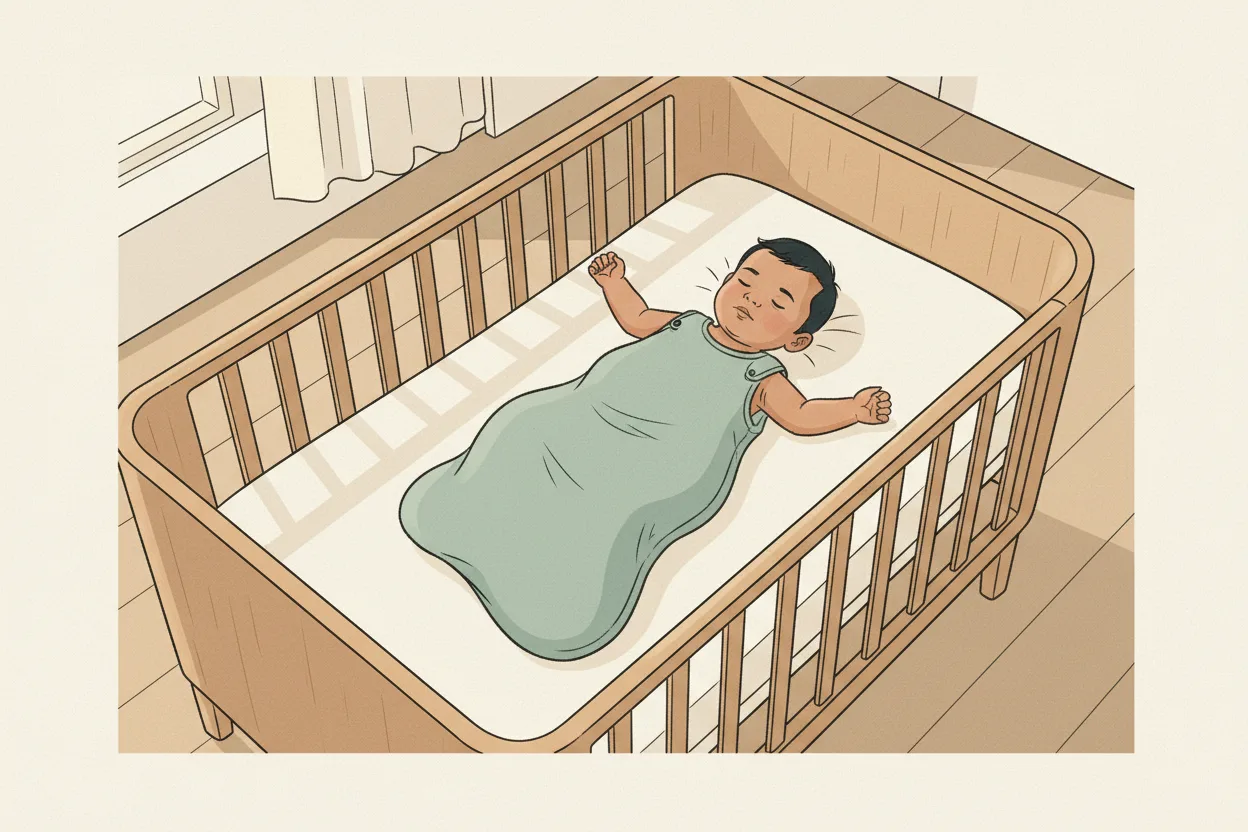
Protect yourself first, and treat that as the intervention. The AAP's advice for parents of a fussy baby is to put the baby somewhere safe — "crib or playpen without blankets and stuffed animals" — leave the room for about ten to fifteen minutes, and use that time to calm down before going back. That is a safety valve, not a settling method. With one working partner and no other help, build the day around the parent's sleep, not the baby's: see coping with nights when there is no help.
Contact naps are allowed; falling asleep yourself is the risk. Holding a sleeping baby while you are awake is fine, and at this age often the only nap that happens. The danger is different. The AAP warns that the risk of sleep-related infant death is "up to 67 times higher" when an infant sleeps with someone on a couch, soft armchair or cushion, and says a baby who falls asleep in a carrier, sling, swing or car seat should be moved to a firm sleep surface on their back as soon as possible. So: sofa and armchair are where it goes wrong, especially when you are this tired. Safe contact napping sets out how to do it without dozing off.
"When will he sleep longer?" — a timeline, not a promise. A longitudinal study in Pediatrics that followed seventy-five infants found the largest single gain in how long babies sleep by themselves came across the stretch from one to four months, and concluded that "the most rapid consolidation in infant sleep regulation occurs in the first 4 months". So the direction is right and the window is weeks, not days — but individual babies vary widely, and nobody can name your date.
When it is worth a medical look
Occasionally "my baby won't sleep" is a symptom. The second mother's instinct — listing wet nappies, good feeding, no crying — is exactly the right check. The NHS says to get help if a baby "is unresponsive, floppy or not waking up as easily as usual", shows no interest in feeding, or "has not had a wet nappy in the past 8 hours", and adds: "Trust your instincts." On the crying side, an Indian Academy of Pediatrics teaching module on incessant cry lists an extreme, prolonged and high-pitched cry, loss of a day-night rhythm to the crying, other abnormal symptoms, and crying that persists past four months of age as pointers to an organic cause worth examining. A baby who feeds well, wets nappies and is not crying is not on either list.
So the label is borrowed, and the week is real. What you are in is the crying peak, a feeding surge and a sleep system that has not yet switched on — all of which resolve by their own clock over the next couple of months. That is a better thing to know than a name.