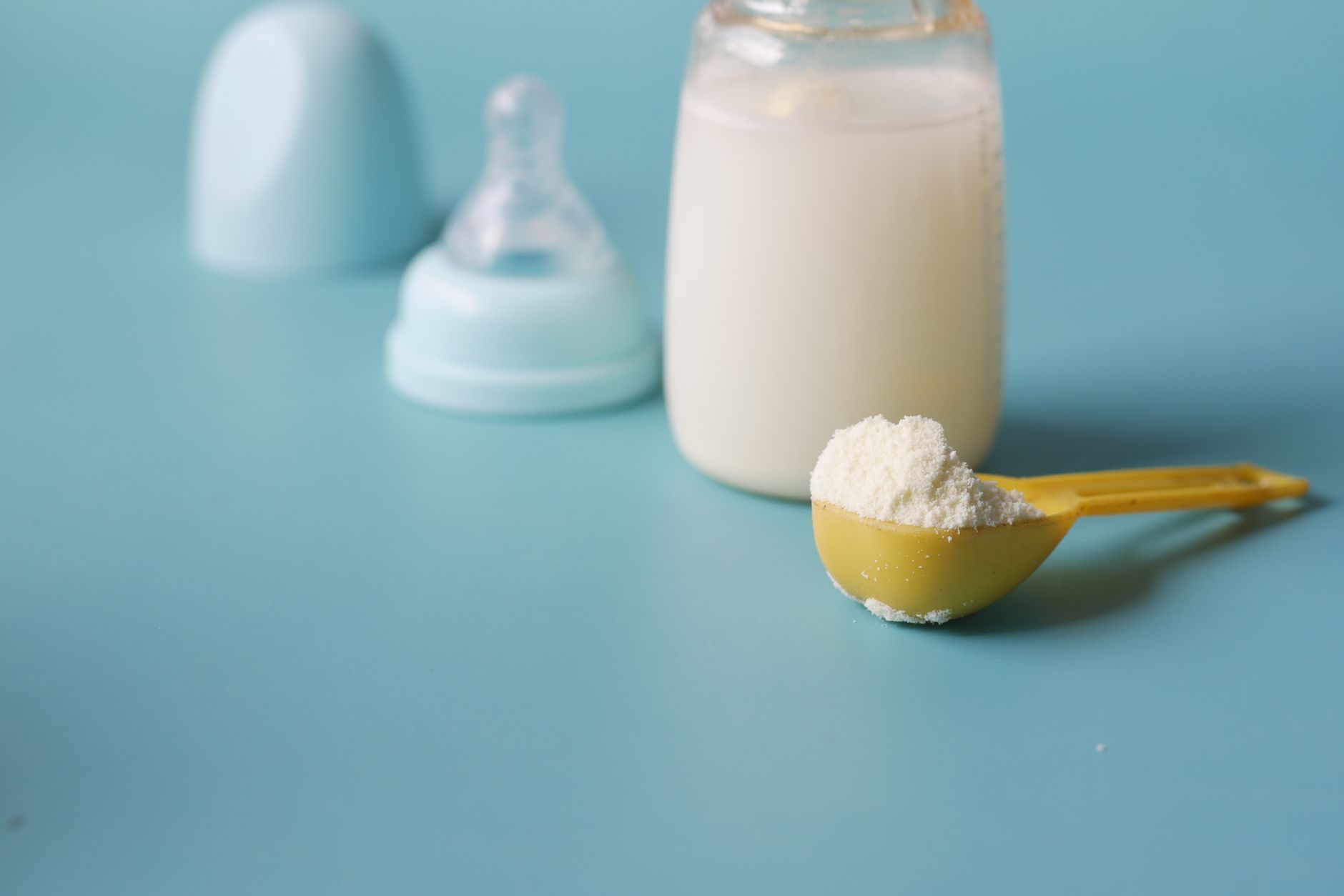
"Which formula is best for my eight-month-old?" has a shorter answer in India than the packaging suggests: the differences between tins are small, and they are small by law. India's Food Safety and Standards (Foods for Infant Nutrition) Regulations, 2020 require that an infant formula "ready for consumption in accordance with instructions of the manufacturer shall contain not less than 60 kcal and not more than 70kcal of energy per 100 ml" — one line of long schedules that pin down protein, fat, carbohydrate, vitamins and minerals the same way.
So the decision is smaller than it feels. One or two formula bottles a day, alongside your breast milk and your son's meals, is an ordinary way to feed a baby this age — not a lesser version of something else.
Not medical advice — consult your pediatrician for guidance specific to you and your baby.
A note on what this article will not do. No brands are named here, and there are no shopping links. WHO's infant and young child feeding guidance recommends "introducing or strengthening legislation to restrict the marketing of formula milk and feeding bottles aligned with the International Code of Marketing of Breast-milk Substitutes". India has that legislation, in the Infant Milk Substitutes, Feeding Bottles and Infant Foods Act. A guide that ranked tins would be promoting them.
Why "Which Formula Is Best" Is Mostly a Non-Question Here
The composition is not a brand decision; it is a regulatory one. A 2020 agricultural report on the gazette notification, published by India's APEDA, records that "the prescribed standards cover requirements specifying the scope, composition, food additives and labeling for each of the following infant food categories" — infant formula and follow-up formula among them, each with its own table. The US Centers for Disease Control and Prevention says it outright: "no brand of infant formula is best".
Be equally clear about what the evidence does not support — that is where the marketing lives. On formulas fortified with probiotics or with manufactured prebiotic oligosaccharides, the American Academy of Pediatrics states that "there is no strong evidence of benefit from the use of these formulas". The pattern is systematic: a 2023 international survey published in The BMJ, covering fifteen countries including India, concluded that "most products did not provide scientific references to support claims, and referenced claims were not supported by robust clinical trial evidence".
That leaves what genuinely varies from tin to tin.
| What you are tempted to compare | What is worth weighing instead |
|---|---|
| Brain, immunity and growth claims | Nothing — these are the claims above |
| "Premium" or imported ranges | Price per made-up litre, over a month |
| What a forum thread rates highest | Whether the chemist below your flat keeps it stocked, and whether your son drinks it |
What Actually Changes at Eight Months
Less than the shelf implies. The NHS states that "research shows that switching to follow-on formula at 6 months has no benefits for your baby", and its bottle-feeding guidance adds that a "first infant formula (first milk) should always be the first formula you give your baby. You can use it throughout the first year". A stage-two tin is a legitimate product for this age bracket; it is not an upgrade he needs.
Iron is the usual reason given for moving up a stage, and it does not hold either: the CDC states that "your child's iron needs can be met by standard infant formulas for the first 12 months of life".
What has changed is the shape of his day: milk is one part of it now, not all. Even so, the NHS notes that once solids have begun babies "will still be getting most of their energy and nutrients from breast milk or first infant formula" — the bottles you are adding are doing real work. If meals are still finding their feet, that is a separate job: our first-week guide to starting solids.
Adding the Bottles Without Losing Your Supply
Go slowly, for your sake rather than his. The NHS advises that when you add formula alongside breastfeeding "it's best to do it gradually to give your body time to reduce the amount of milk it makes – this helps lower your chance of getting uncomfortable, swollen breasts, or mastitis". In practice: swap one feed at a time and hold there a few days, not two pumping sessions dropped on a Monday.
Expect a wobble on the first few bottles. The same guidance notes that it may take a while for a breastfed baby to get the hang of bottle feeding, and a baby used to expressed milk may turn his head away from a new taste. Offering it when he is cheerful rather than ravenous helps, and so does letting your husband or his carer give those first bottles while you are out of the room. If he digs in, see bottle refusal after a return to work.
The rest is logistics covered elsewhere: how much per feed, the part-used tin and refill packs, storage for backup feeds, warming a bottle, and pumping around a long commute — read that one before cutting sessions you might still want.
How to Judge a Brand Controversy
You are weighing a headline against your paediatrician. Here is a method rather than a verdict — it keeps working after today's story has gone.
Separate a safety action from a marketing dispute. A safety action is a formal, documented procedure: a 2017 agricultural report on India's Food Safety and Standards (Food Recall Procedure) Regulations, published by APEDA, records that "the regulations include detailed procedures to recall food from the market at any stage of the food chain, including the food possessed by consumers". A question about whether an advertisement overstated a benefit is a different proceeding, and says nothing about whether the powder meets the composition standard — which is fixed either way.
Look for the regulator's own words. India's food regulator is the Food Safety and Standards Authority of India, and a real action leaves a trail on its site: a notice naming the product, a batch, a date, instructions for anyone holding it. A screenshot of a screenshot is not that trail. A story with none of those details that happens to plug a rival at the end is marketing wearing a press release.
Then weigh the sources you have. Your paediatrician knows your son and carries responsibility for what they suggest; the regulator carries it for the product; a forum thread carries neither. If your paediatrician has suggested something and the regulator has published nothing against it, that pairing beats a trending headline — and taking the headline into your next appointment is entirely reasonable.
Questions Indian Parents Ask
Does he need a stage-two tin at nearly eight months? No. The NHS position is that "research shows that switching to follow-on formula at 6 months has no benefits for your baby".
Will one or two bottles a day end my breastfeeding? It need not. The NHS advice is to introduce formula "gradually to give your body time to reduce the amount of milk it makes" — a slower change protects your comfort and the feeds you want to keep.
My mother-in-law says a brand she saw in the news is dangerous. How do I answer? With the trail, not the rumour: ask whether the regulator published anything. A real recall in India follows a defined procedure covering food "at any stage of the food chain, including the food possessed by consumers" — it leaves something checkable behind.
Why will no one just name a brand? Because of the law. WHO recommends that countries restrict "the marketing of formula milk and feeding bottles aligned with the International Code of Marketing of Breast-milk Substitutes", and India legislates on that basis. Your paediatrician may advise you on a product; a published guide may not promote one.