If your child gets burned tonight, the first thing to do is put the burn under cool running water. The NHS says to hold it there for 20 minutes, as soon as possible and within three hours of it happening. Nothing else goes on it — the World Health Organization's burns guidance says not to apply ice, oils, butter, toothpaste, traditional pastes or other household substances.
That is the whole of the first aid. The rest is about where the risk actually sits.
Not medical advice — if you are weighing up whether a burn needs a doctor, take the child and let the doctor decide.
The diya is the hazard nobody guards
Everyone watches the crackers. The evidence points closer to the floor.
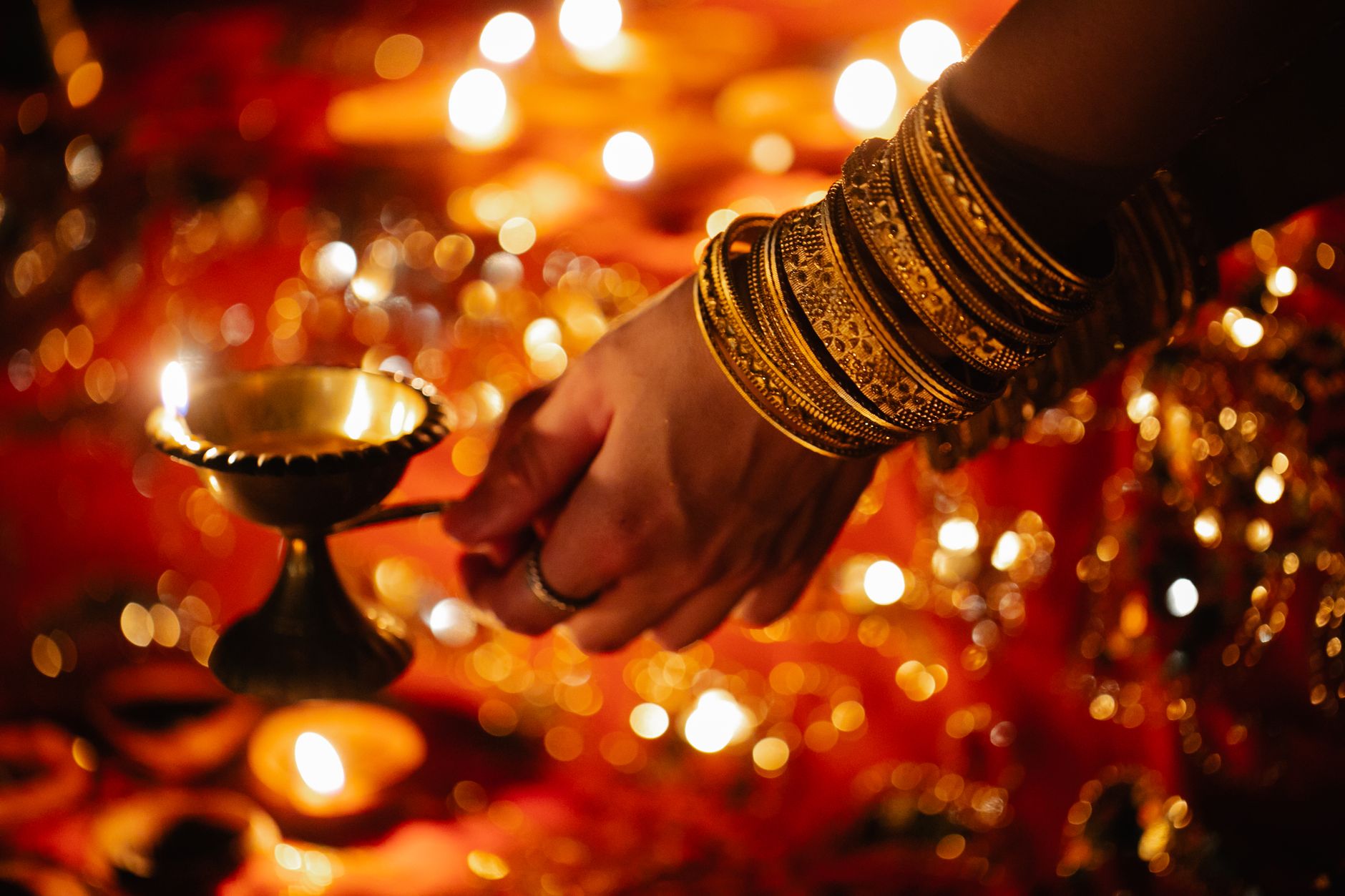
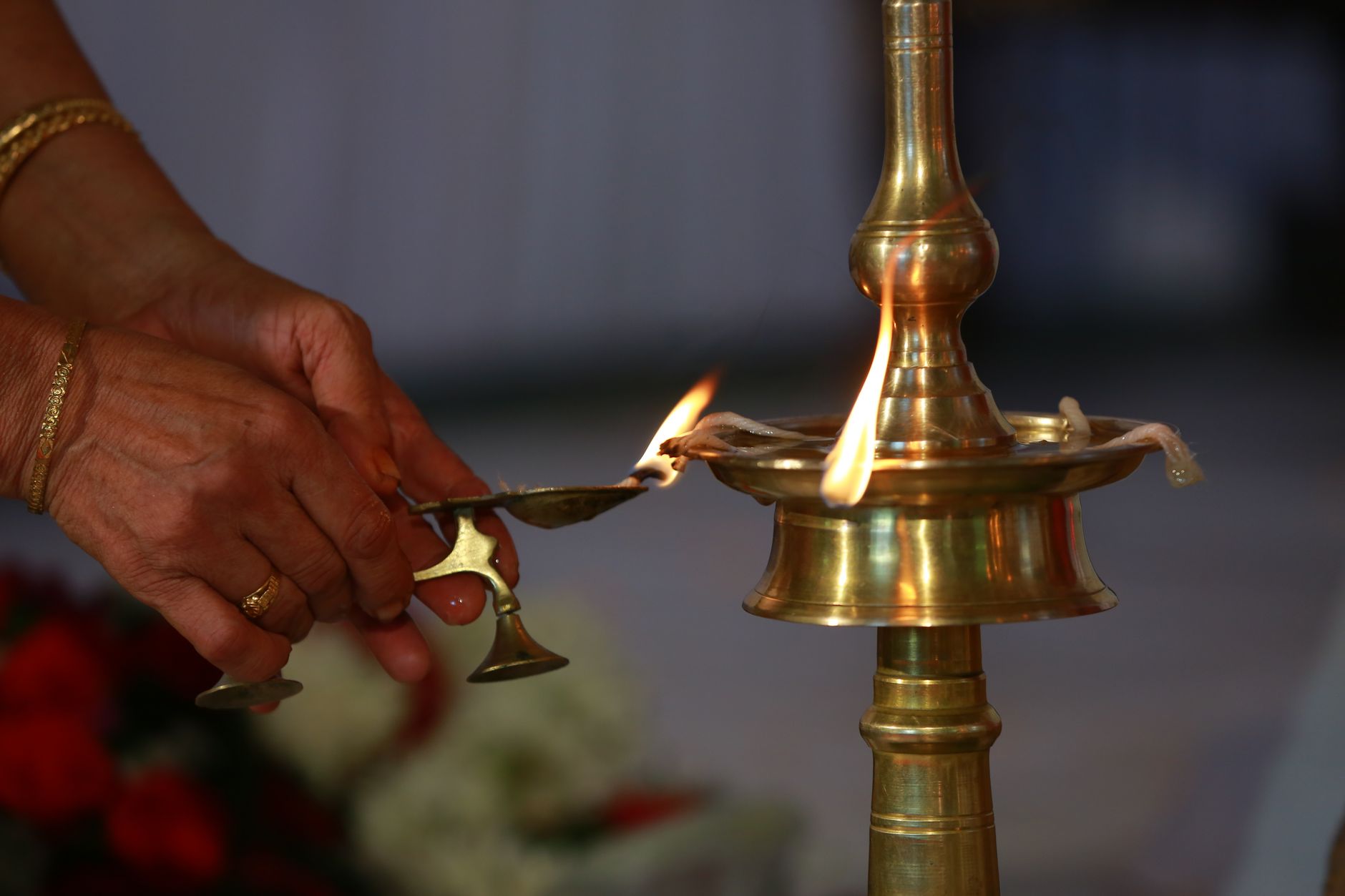
A five-year review of Diwali-period burns from the burns department at Safdarjung Hospital in Delhi found that almost a third of all Diwali-related burns at that centre — 32.5% — were caused by diyas, and that the single main reason was a burning diya left on the floor. A third of those patients needed admission.
That is a toddler-shaped hazard. A diya set out along a rangoli, on a low sill, or on the edge of a step sits exactly at the height a newly walking child reaches for, and holds hot oil that tips when grabbed. The Indian Academy of Pediatrics' burn-prevention guidance is blunt about it: do not leave lit candles or diyas unattended, and do not allow children near firecrackers unattended at all. Height is the fix — a ledge above shoulder level, a wall niche, a sealed lantern.
Crackers: the hands, and the one that did not go off
A prospective study of 65 children brought to a Delhi emergency room on Diwali day found that 90% of them were unsupervised when they were hurt, and that hands were the commonest site injured (62%), then the face (32%) and the eyes (10%).
The showy item is not the frequent one: a ten-year series from KEM Hospital in Mumbai found flares and fountains caused the most injuries (39%) while sparklers caused the fewest (0.6%), and that 92% of injured children aged 5 to 14 were unsupervised. But uncommon is not the same as mild. The US Consumer Product Safety Commission puts a sparkler's burning temperature at about 2,000 degrees Fahrenheit — roughly 1,100 Celsius, hot enough to melt some metals — and says never to allow young children to play with or ignite fireworks, sparklers included.
The third mechanism is the cracker on the ground that looks finished. CPSC guidance is never to re-light or pick up a firework that has not ignited fully — and a toddler cannot tell a spent cracker from a dud, so an adult clears the ground before the child goes out on it.
One honest limit: none of this establishes which mechanism is commonest overall. These are single-hospital series with different catchments and denominators — the Delhi review counted every Diwali burn, the Mumbai series only firework injuries — and there is no national count. Treat all three as live.
Why a toddler is not a small adult here
A 2024 review of paediatric burn wound management in Seminars in Plastic Surgery sets out two anatomical facts: very small children have thinner skin, which leads to a higher risk of full-thickness burns, and children tend to freeze when they touch something hot instead of pulling away, so the contact lasts longer and the burn goes deeper. The same brush against the same hot lamp is a red mark on your hand and a full-depth burn on theirs.
The Indian Academy of Pediatrics adds the second half: children have relatively thinner and more sensitive skin and a larger surface area relative to body mass, which is why their local and whole-body response to a burn differs from an adult's. A burn the width of your palm is a patch on an adult and a meaningful share of a toddler's body surface — and that share, not the look of the wound, is what turns a shrug into a hospital visit.
The first 20 minutes, exactly
Cool running water, 20 minutes, within three hours. The NHS adds that if there is no running tap, cool bottled water or a wet towel will do.
Twenty minutes is far longer than it feels — set a timer, because nobody holds a struggling toddler under a tap that long by instinct. In a cohort of 2,495 children with burns, those given 20 minutes of cool running water within three hours of injury had lower odds of needing a skin graft and lower odds of the burn turning out full thickness — and nearly three in ten of them did not get the full duration. If you lost the first minutes to panic, cool it anyway: the window runs to three hours, not three minutes.
Cool the burn, not the child. The Indian Academy of Pediatrics' first-aid guidance rules out very cold water and ice, and says not to immerse a severe burn because it can bring on hypothermia — a tap on the burnt patch, not a bath. WHO guidance adds: do not pull off clothing stuck to the wound, and do not deliberately break the blisters.
What not to put on it
| What a household reaches for | Why not |
|---|---|
| Toothpaste | WHO lists it among the substances not to apply; the IAP rules it out by name, because it makes judging the burn's depth harder |
| Ghee, butter, oil, grease | WHO names oils and butter; the AAP says these home remedies can actually make the injury worse |
| Ice or iced water | The AAP says not to use ice — it may delay healing |
| Haldi paste, ink, powders | WHO's list covers traditional pastes and other household substances; the AAP names powder specifically |
This is where households most often go wrong, and not through carelessness. In a survey of 400 adults in Rawalpindi, toothpaste was the single most frequently applied item after a burn (47.5%), ahead of cool running water (20.3%), and fewer than one in ten people cooled the burn for the right length of time. That is a Pakistani sample, not an Indian one, but the reflex will be familiar here.
When to go instead of deliberating
| Take the child in now if | |
|---|---|
| The burn is very large or deep | NHS: call emergency services or go to A&E |
| It is on the face, hands, mouth, genitals or bottom | NHS names face, genitals or bottom; the AAP says burns of the hands, mouth or genitals need immediate medical attention |
| It was caused by electricity, an acid or a chemical | NHS: an emergency; the AAP says all electrical burns need immediate medical attention |
| It is anything more than a superficial burn, or redness and pain last more than a few hours | AAP: contact your paediatrician |
| Your child is small and you are not sure | The NHS says to get advice for a child under 5 rather than decide alone |
A burned hand is the case parents most often underrate: it is the commonest injury site in the Delhi children's series, and it goes to a doctor even when it looks small.
The one variable you control
Distance. In the Delhi study 90% of the injured children were unsupervised, and in Mumbai 92% of the injured 5-to-14-year-olds were — which is why a child anywhere near lit crackers needs an adult within arm's reach rather than nearby. In a shared courtyard that means one named adult on the child, not a crowd's general supervision.
Clothes are the other free decision. The Delhi authors recommend non-synthetic, non-flowing clothes for children around fireworks — worth knowing before you dress a toddler in a synthetic kurta or a lehenga with a trailing dupatta.
Three neighbouring questions have their own guides: cracker noise and a baby's hearing, air quality and going outside (generally, and in a Delhi winter), and festival obligations after a birth.