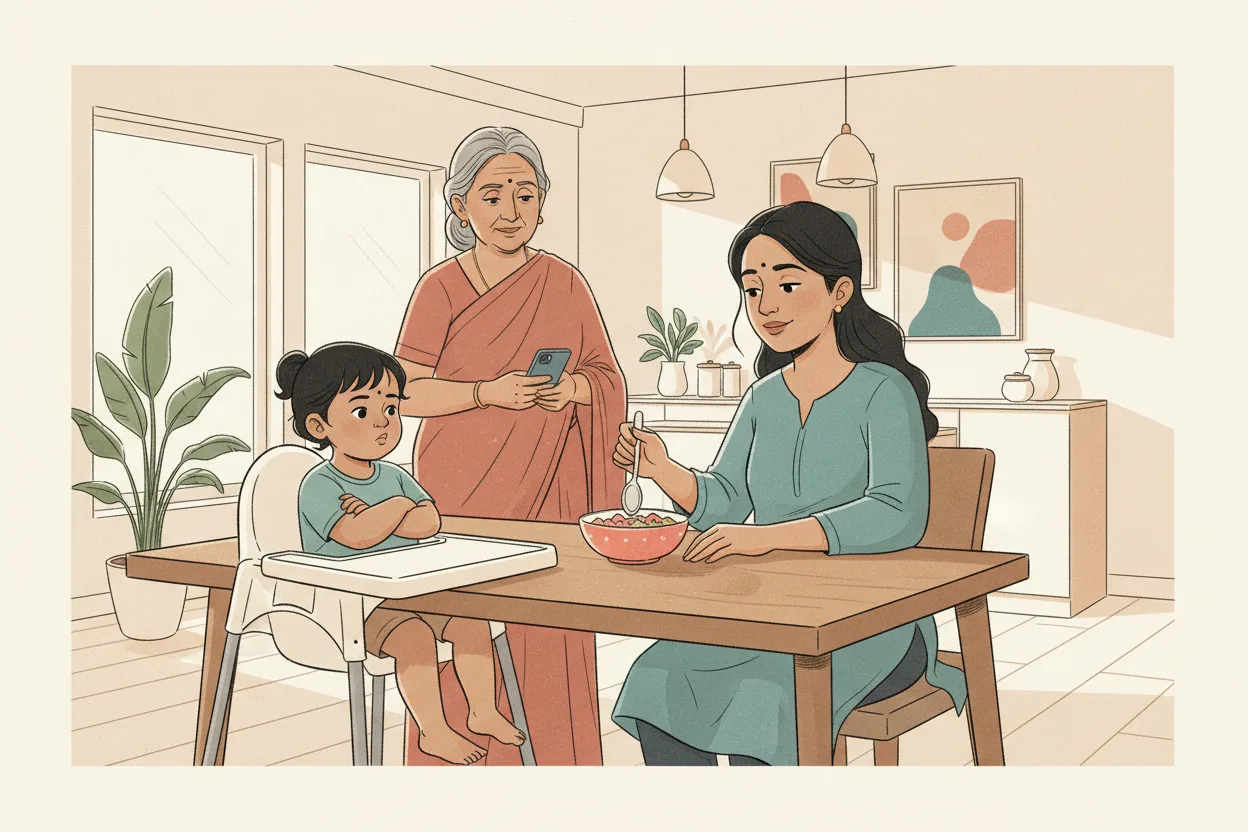
Not every postpartum warning from your mother-in-law is superstition — and not every one is medical fact either. Some of the "or the baby will suffer" warnings you hear point to real, documented risks. Others are traditional rules with no medical backing at all. This guide sorts eleven common ones into each camp, with the source behind every call, so you know exactly which warnings to act on and which to let go of without guilt.
Not medical advice — consult your pediatrician or obstetrician for guidance specific to you and your baby.
Why This Gets Confusing at Home
In many Indian homes, new parents hear a steady stream of instructions from grandmothers, aunts, and visiting relatives — some rooted in real risk to the baby or to you, some rooted purely in custom. The two arrive with the same tone of urgency, which makes them hard to tell apart. Sorting them matters: treating every warning as equally serious means panicking over things that carry no real risk, or tuning out a genuine one along with the rest. Once you know which is which, you and your partner can act fast on the real warnings and quietly set the rest aside.
Warnings Worth Taking Seriously
These are the ones where, if a relative raises a concern, it's worth listening — not because tradition says so, but because a recognized medical authority backs it.
Heavy bleeding, fever, or foul-smelling discharge
If someone tells you your bleeding "looks like too much," don't wave it off as normal recovery. Cleveland Clinic advises contacting your provider if you're soaking through pads several times an hour after leaving the hospital, or passing blood clots larger than a golf ball — these can be signs of infection or hemorrhage, not routine healing.
How the baby is swaddled
Wrapping baby's legs straight and pressed together is common for a "neat" swaddle, but the International Hip Dysplasia Institute states that swaddling with the hips and knees held in an extended position may increase the risk of hip dysplasia and dislocation; the hips should stay free to bend up and out.
Skin turning more yellow, or baby hard to wake
Mild jaundice in the first week is common and often needs only monitoring, but not always. The American Academy of Pediatrics (HealthyChildren.org) advises calling your baby's doctor if their skin turns more yellow, or if they are hard to wake, fussy, or not feeding well — more sunlight at home is not a substitute for that call.
Kajal, kohl, or surma on the baby
Here the traditional practice itself is the risk, not the warning against it. A CDC-authored case report (published via PubMed Central) found that kajal and similar traditional eye cosmetics have been found to contain lead concentrations as high as 70%, and have been documented as a source of childhood lead poisoning for more than 30 years. Skip it, however insistent the relative offering it.
Honey given to a newborn
A spoon of honey to "sweeten" a first taste, settle a cough, or as part of a birth ritual is common in many households — but here too, the practice itself is the risk. The American Academy of Pediatrics (HealthyChildren.org) states that honey is a source of botulism spores and should be avoided in babies under 12 months, because a young baby's gut can't yet handle them the way an older child's can. Wait until after the first birthday, whatever the occasion.
Which way the baby sleeps
A relative insisting a baby "sleeps better" on their stomach or side is going against, not with, the safety evidence. The American Academy of Pediatrics (HealthyChildren.org) states that babies should always sleep on their backs, because infants who sleep on their tummies or sides may have more trouble getting enough oxygen and more trouble waking up if they do — both linked to a lower risk of SIDS. Back to sleep, every time, for naps and at night.
Low mood that doesn't lift
Feeling low in the first couple of weeks after delivery is extremely common, but it isn't something to just push through indefinitely. The American Academy of Pediatrics (HealthyChildren.org) states that 50% to 80% of people who deliver a child experience the mood shifts known as the baby blues, while 1 in 8 go on to develop the more serious, distinct condition of postpartum depression — which needs professional care, not guilt.
Traditional Rules You Can Safely Question
In these areas, a relative's warning isn't backed by evidence. Follow the family custom if it brings comfort, but you're not risking anything by skipping it.
A specific substance on the cord stump
Many households insist on a particular antiseptic, oil, or powder for the umbilical cord stump. For babies born in hospital, a systematic review on PubMed Central found no benefit to using any topical substance, including antiseptics, over simply keeping the cord dry and untouched.
Water or ghutti before six months
Elders sometimes insist a baby needs water or ghutti "in this heat," well before six months of age. WHO states that babies do not need any food or drink besides breast milk — not even water — until they are six months old.
Discarding the first milk
Some traditional advice treats colostrum, the thick, yellowish first milk, as "not real milk" and has it discarded before regular feeding starts. Cleveland Clinic states that colostrum is nutrient-dense and high in antibodies and antioxidants that build a newborn's immune system — it's worth feeding, not skipping.
A fixed number of rest days before you move around
"Forty days of complete rest" is common advice, but the real guidance is about readiness, not a calendar. The NHS advises that after a straightforward birth, you can start gentle exercise like walking as soon as you feel up to it, while high-impact exercise should wait for advice at your six-week postnatal check rather than a fixed traditional number of days.
Handling the Conversation at Home
Winning an argument about tradition is not necessary to keep your baby and yourself safe — acting fast on the warnings that matter, and quietly letting the rest go, is enough. When a warning comes up, sort it: is this about a specific symptom, or is it about "the way things have always been done"? A specific symptom deserves a same-day conversation with your doctor. A custom is something you and your partner can decide on together, as a team, rather than as a disagreement to win.
If you'd rather not turn a warning into a debate, save the relevant guidance and talk it through with your partner first — decisions about your baby's care are for the two of you, communicated to the rest of the family together rather than argued over individually.
Frequently Asked Questions
My mother-in-law insists I shouldn't wash my hair for weeks after delivery. Is that a real risk? That's a household custom, not one of the medical warnings above. Follow it if it brings comfort — there's nothing here suggesting everyday hygiene puts you or your baby at risk.
How do I tell baby blues apart from something that needs a doctor? The baby blues are common and usually ease within a couple of weeks on their own. If low mood, anxiety, or trouble functioning continues past that or feels severe at any point, that's the moment to call a doctor rather than wait it out.
Is a small amount of homemade kajal on a newborn safer than store-bought? No amount is known to be safe. PubMed Central documents kajal and similar traditional preparations, homemade included, as sources of childhood lead poisoning — the risk is in the preparation itself, not the brand.
When can I start walking or light exercise after a normal delivery? The NHS says you can start gentle exercise as soon as you feel ready after a straightforward birth, and to save high-impact activity for after your six-week check.
Does the umbilical cord need anything beyond keeping it dry? For babies born in hospital, current evidence doesn't show a benefit to antiseptics or traditional substances over simply keeping the stump dry and clean. Ask your paediatrician if your baby's situation is different.
What if the baby looks a little yellow but is feeding fine and easy to wake? Mild jaundice that resolves on its own is common, but the AAP advises calling the doctor if the yellow color increases, or if your baby becomes hard to wake, fussy, or feeds poorly — when in doubt, call rather than wait.