
You can love how close your baby is with their grandparents and still set limits on handling, kissing, and rough play. The American Academy of Pediatrics' HealthyChildren.org advises that even grandma or grandpa should hear "no thank you" to a hug or kiss without an argument — that's the standard to aim for, and it applies just as much when your baby is too young to say it themselves.
Not medical advice — consult your pediatrician about your baby's specific health needs.
Why This Comes Up So Much in Indian Joint Families
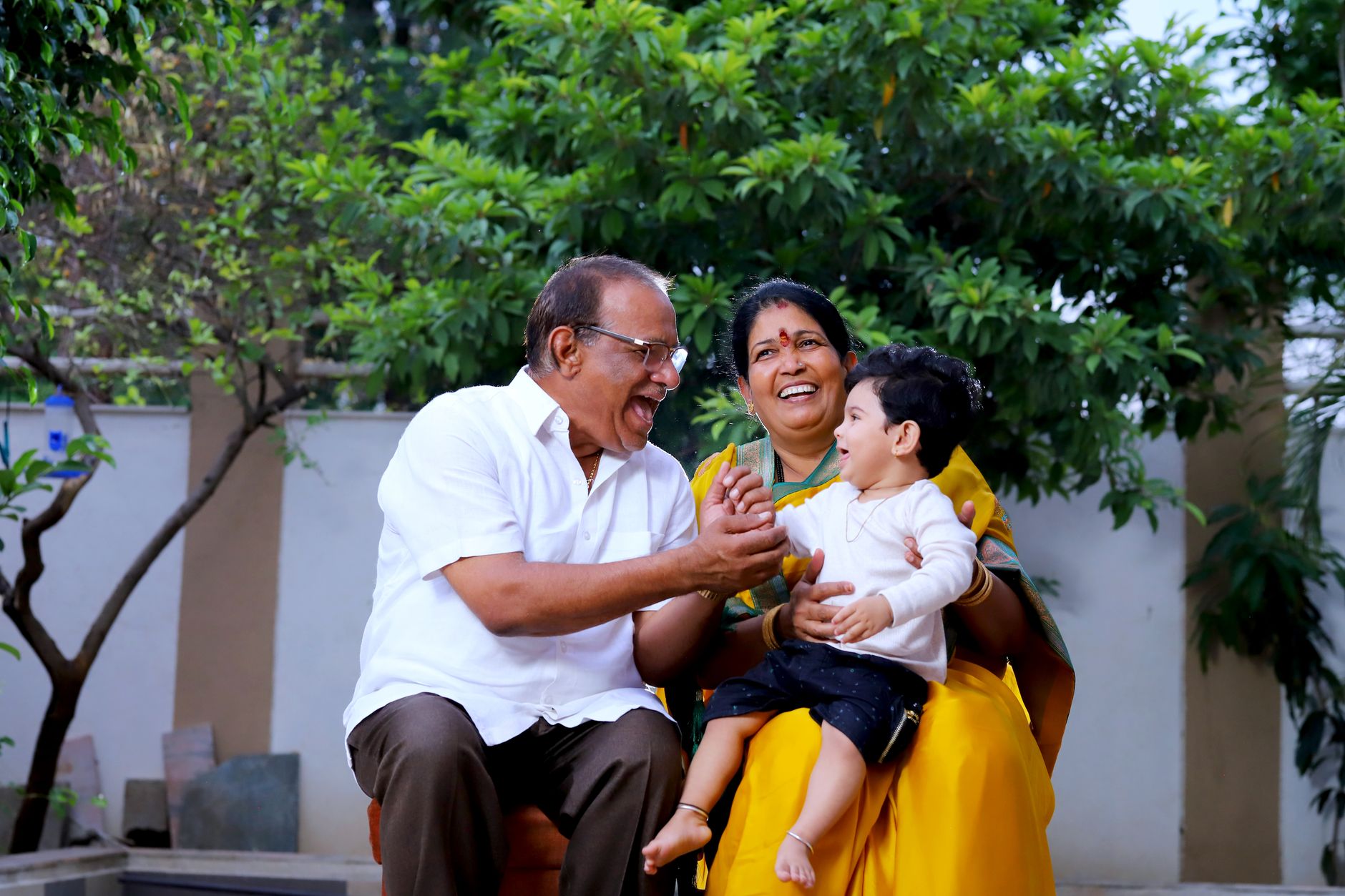
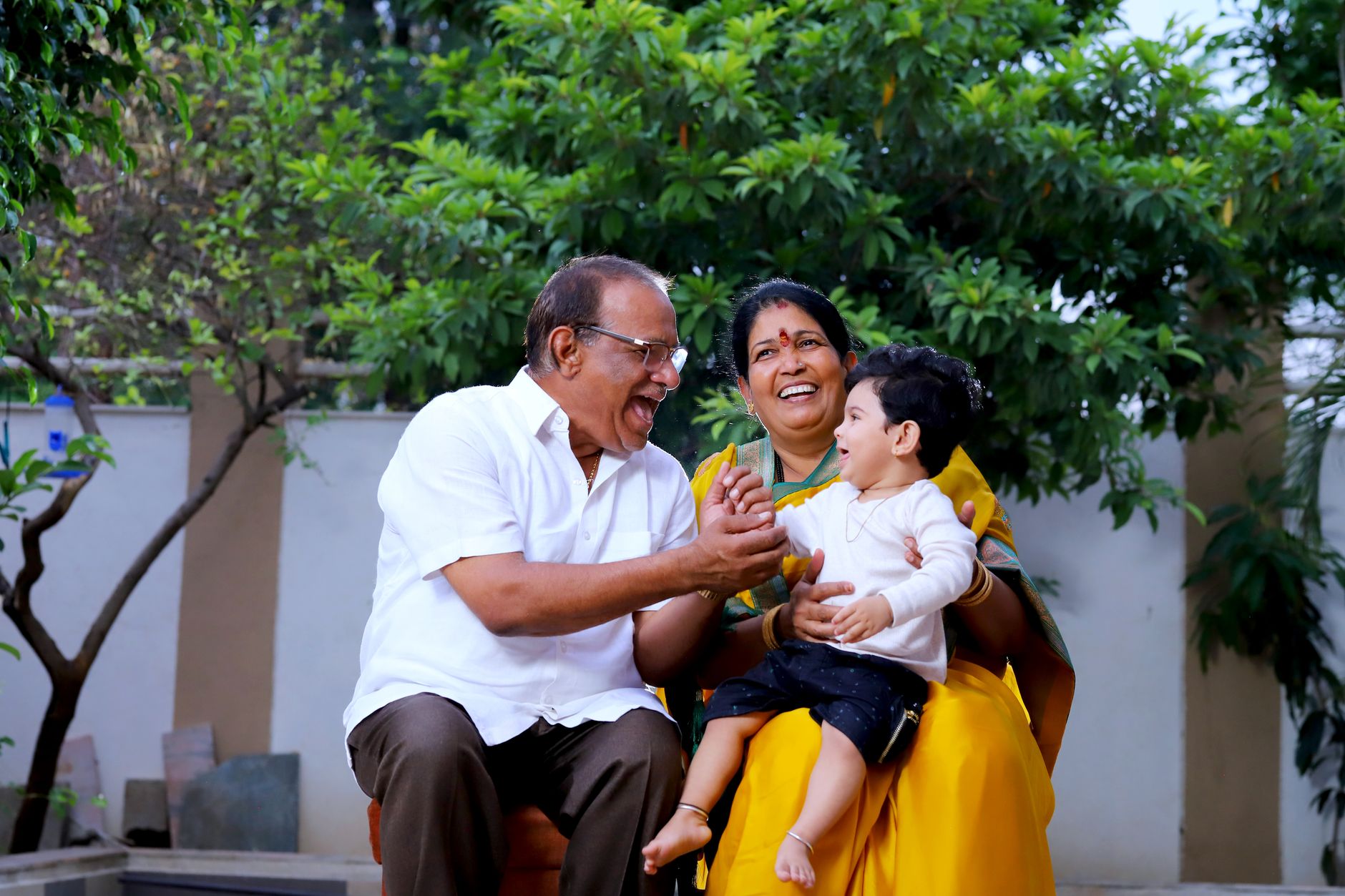
In a joint or multi-generation home, grandparents often see holding, kissing, and handling the baby as their right, not a request — they changed diapers before you were born, and they expect the same easy access now. That's not malice. But "everyone gets a turn" can mean a newborn is passed between several sets of hands within an hour, kissed on the mouth by visiting relatives, or picked up mid-nap "just for a minute." Naming what's a real health concern versus what's simply a preference makes it much easier to hold your ground without turning it into a family fight.
Teaching Body Autonomy Starts Long Before Baby Can Talk
It can feel odd to talk about "consent" for a baby who can't yet sit up. But the principle applies from day one, and it's really about what you model and permit, not about what the baby understands. The AAP's HealthyChildren.org is direct on this: do not force or guilt your child into giving hugs or kisses, and it's okay for them — eventually in their own words, and for now through your words on their behalf — to decline, even with grandma or grandpa. When you gently redirect a relative rather than pushing your baby into their arms to avoid an awkward moment, you're already teaching that their body isn't obligated to be available on demand. That habit, repeated for years, is what builds a child who knows their "no" counts later.
Where the Line Is a Genuine Health Issue, Not Just Your Preference
Some of what feels like an overreaction to relatives is backed by real evidence — worth knowing so you can be specific and unapologetic about these particular limits, even while staying flexible on the rest.
Kissing on the mouth, especially with a cold sore. HealthyChildren.org (AAP) warns that parents or relatives with an active cold sore should be especially careful not to kiss babies — the herpes simplex virus that causes cold sores can make a young infant seriously ill. This is one to say out loud, plainly, whenever anyone in the house has a visible sore: "no kisses until it's healed," no exceptions.
A house full of visitors handling the baby. HealthyChildren.org (AAP) states that RSV is the most common cause of hospitalization in children under age one, and it spreads through contact with infected saliva, mucus, or nasal discharge — exactly the kind of contact that happens when a baby is kissed and passed around by many relatives. Frequent face-to-face handling by a stream of visitors is a real infection-risk conversation, not just a boundary preference.
Everyone who handles the baby staying current on vaccines and hygiene. HealthyChildren.org (AAP) explains "cocooning" a newborn means everyone around the baby — parents, siblings, grandparents, caretakers — stays up to date with their own immunizations and washes hands before touching the baby. It's a reasonable, evidence-backed ask of grandparents specifically, and framing it as "the doctor recommends this for everyone who holds him" makes it about protecting the baby, not about distrust of them.
Rough jiggling, tossing, or bouncing a fussy baby. HealthyChildren.org (AAP) cautions that because babies can't yet fully support their own heavy heads, violent or forceful shaking can injure a baby's brain. Most grandparents would never intend harm, but an older relative bouncing an unsettled baby vigorously to quiet them, or jerking them upright quickly, is worth a calm, immediate "please, gently" — this is a line, not a style preference.
Massage and Handling: Where to Bend, and Where Not To
Daily oil massage by a grandmother is common and, done gently, is a nice bonding ritual rather than something to shut down. The evidence actually supports keeping it — a community-based trial in South Asian newborns found that sunflower seed oil matured a newborn's skin barrier faster than traditional mustard oil during the first week of life, so swapping the oil (not banning the massage) is often the easiest, most evidence-backed compromise.
What matters more than the ritual is watching the baby's own reaction to it. HealthyChildren.org (AAP) recommends always watching for signs your baby is enjoying the massage, and stopping if they show any discomfort. If a grandparent presses on regardless of the baby's obvious distress, that's the actual boundary worth naming — not the massage itself.
When Baby Needs a Break From Being Passed Around
A newborn or young baby doesn't have the same social stamina adults do, especially with a full house of relatives wanting a turn. Healthline (medically reviewed) advises taking your baby to a quiet room for small breaks from all the snuggles when introducing them to friends and family. Watch for your baby turning their face away, fussing, or going stiff in someone's arms — that's your cue to step in and take them to a calmer space, not a signal to wait it out for politeness.
This is also the age where your baby starts telling relatives "no" in their own way, not just through you. HealthyChildren.org (AAP) explains that starting around 8 to 12 months, babies commonly develop stranger anxiety — even relatives and frequent caregivers they were once comfortable with may suddenly get hidden from or cried at, especially if they move in quickly. That's not a sign anything's wrong with the relationship; it's a normal developmental stage, and a good moment to start letting the baby's own reaction — not just your rules — guide who gets to hold them and for how long.
Scripts for Setting the Boundary Without an Accusation
The goal is a specific ask, not a blanket ban. Most relatives mean well; a narrow, specific request lands better than a broad one.
- "Let's all wash hands before holding him — the doctor told us to ask everyone." Puts the rule on the pediatrician, not on your judgment of them.
- "No kisses on the mouth till that sore's healed, please — it's not about you, it's a baby thing." Direct, specific, time-limited.
- "He's had a big day — let's give him ten minutes in his room before the next round." Frames a break as baby's need, not a rejection of the visitor.
- "Please go gentle if he's fussing — jiggling too hard can actually hurt him." Calm, immediate, and matter-of-fact rather than accusatory.
- "Try sunflower oil for the massage instead — it's actually gentler on newborn skin." Offers a swap instead of a no.
Frequently Asked Questions
My mother-in-law says refusing hugs will make my baby "cold" toward family. Is she right? No. The AAP's HealthyChildren.org is explicit that children, including toddlers, should not be forced or guilted into hugs or kisses, and it's fine for them to say no even to grandparents. Warmth and closeness can still happen on the baby's terms.
Is it really necessary to say no to kissing on the mouth? Yes, especially if anyone has a cold sore. HealthyChildren.org (AAP) warns that relatives with an active cold sore should be especially careful not to kiss babies, since the virus can cause serious illness in infants.
How do I ask grandparents to wash their hands without it sounding like an insult? Attribute it to the pediatrician rather than yourself. HealthyChildren.org (AAP) describes hand hygiene from everyone who handles a newborn as a standard "cocooning" practice, not a judgment of any one person — "our doctor asked everyone to do this" spreads the ask evenly.
Do I need to stop the daily massage with my in-laws? Not necessarily. A trial in South Asian newborns found sunflower oil matured newborn skin faster than mustard oil, so suggesting an oil swap keeps the bonding ritual while addressing the part that's actually backed by evidence. Keep watching that whoever massages your baby stops if the baby shows discomfort.
How do I tell if my baby is overwhelmed by all the visitors, versus just being fussy? Look for turning away, stiffening, or fussing that doesn't settle when handed back to you. Healthline advises taking the baby to a quiet room for short breaks during family gatherings — it usually resets things quickly.
What if a grandparent gets defensive when I set a limit? Keep it about the baby, not about them — "the doctor said" and "he's had a big day" both work better than explaining your own parenting philosophy in the moment. Most defensiveness softens once they see the rule applies to everyone equally, not just to them.