

Wake-window charts circulating on parenting apps say a newborn should be awake for 45–90 minutes at a stretch. Sleep Foundation notes the real range is wider than that — as little as 30 minutes to as much as 90 — and that plenty of calm, alert newborns simply sit at the long end of it. If your baby stays happily awake longer than a chart says they "should," that's not automatically a problem.
Not medical advice — consult your pediatrician for any concern specific to your baby.
Why the Charts Don't Match Every Baby
The wake-window numbers that circulate in Indian parenting WhatsApp groups and apps are usually presented as a single fixed rule, when the underlying guidance is actually a range. Sleep Foundation notes that having short wake windows "as little as 30-45 minutes and as much as 90 minutes is part of normal development at this age" — a wide spread for the first weeks of life, and one that leaves plenty of room for your particular baby to sit at either end without anything being wrong.
There's a biological reason charts feel like they don't apply cleanly yet. A systematic review in PMC found that stable, predictable day-night sleep patterns and consistent melatonin release typically develop only "after the 2nd to 6th (or 17th) month of life." A newborn genuinely does not have a mature internal clock yet — so expecting one to clock in and out on a printed schedule is asking for a level of regularity their brain isn't producing yet. A calm baby who stretches a wake window doesn't mean the chart-checking is being done wrong; it often just means that clock hasn't switched on yet.
It also helps to know the number itself isn't meant to stay put. Cleveland Clinic's wake-window guide notes a rough progression — about 0.5 to 1 hour from birth to 1 month, stretching to 1 to 2 hours from 1-3 months, and 1.25 to 2.5 hours by 3-4 months — because "what you're looking for is that each wake window will get longer with time." So a baby who feels "stuck" on a chart's early-weeks number today isn't stuck there for good; the whole range is expected to keep climbing over the next several months.
What's Actually Normal for Newborn Sleep
The bigger picture matters more than any single wake-window number. HealthyChildren.org (AAP) states that "while newborns sleep about 16 to 17 hours per day, they may only sleep 1 or 2 hours at a time." That's the real pattern worth tracking — total sleep across 24 hours, arriving in short, scattered stretches rather than one clean nap schedule.
| What the chart implies | What the research actually says |
|---|---|
| A fixed 45–90 minute wake window every time | 30–90 minutes, and it varies widely baby to baby |
| Baby should settle into a predictable day-night rhythm early | A mature circadian rhythm and consistent melatonin release usually arrive around month 2–6 |
| Total sleep should be one long overnight block | About 16–17 hours a day, in 1–2 hour stretches |
When Longer Wakefulness Is Fine — and When It's Worth a Closer Look
A baby who stays awake longer than a chart suggests, but feeds well and settles calmly, usually isn't showing a problem — they're showing you their own range. What's actually worth watching is feeding output, not the clock. HealthyChildren.org (AAP) advises checking for "6 or more wet diapers per day, with nearly colorless or pale yellow urine, by 5 to 7 days old," along with steady weight regain — that's the real signal of adequate feeding, not how long baby stayed awake between feeds.
If evenings feel especially long and fussy, that's common too. KellyMom's lactation-reviewed guidance states that "it is very common for babies to be fussy and nurse very often in the evenings, particularly in the early months" — frequent, long, fussy cluster feeding in the evening is normal newborn behaviour, not a sign that your supply has dropped.
Where it's worth paying attention is how baby looks by the end of a long stretch awake. Cleveland Clinic explains that "babies who are overtired, on the other hand, often cry louder and more frantically than usual" — along with back-arching and clinginess, rather than settling on their own. If you notice those signs, it's a cue to start your wind-down routine, not a sign something is medically wrong. Extending a wake window a little past a chart's number is fine for a calm baby; pushing well past the point of frantic crying and arching is the moment to bring the next sleep forward.
Safe Sleep for Every Nap, However Long the Wake Window Ran
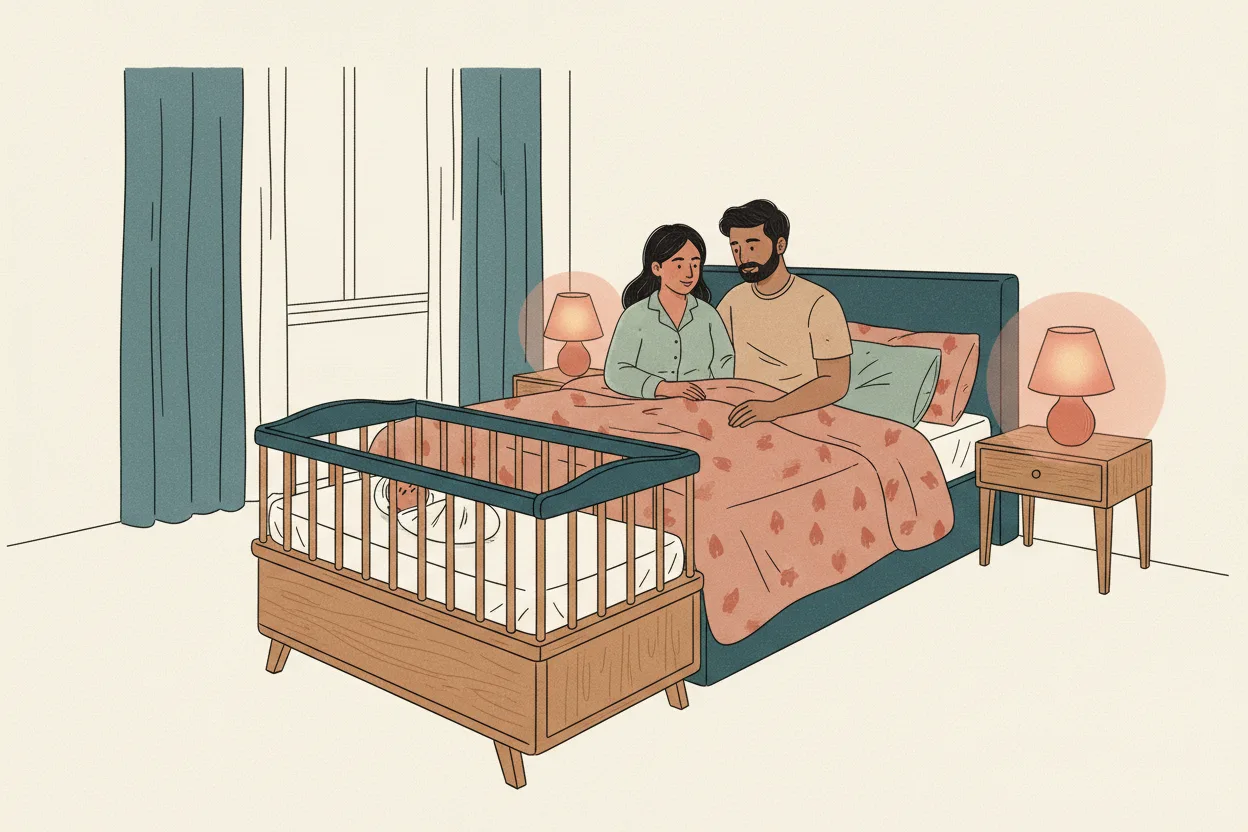
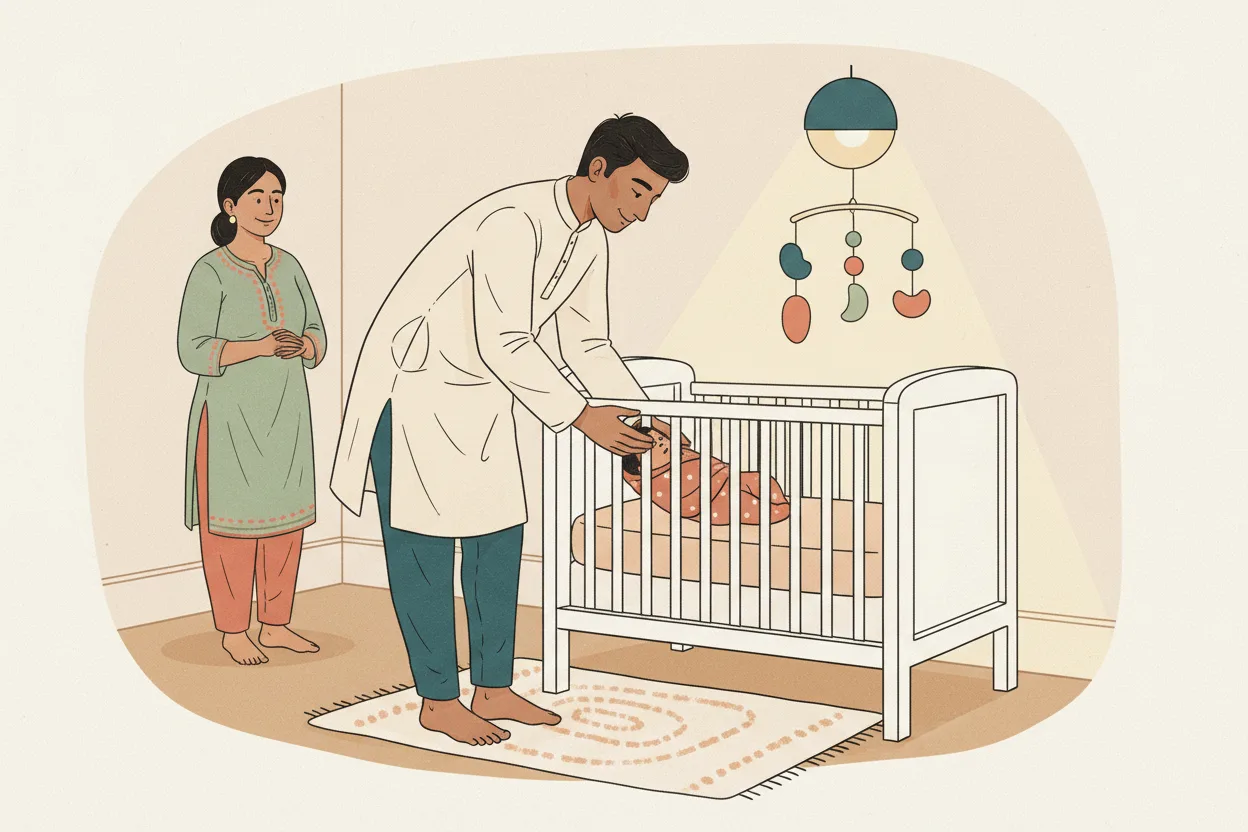
Whenever that wake window does end, how baby goes down matters more than exactly when. The AAP recommends placing baby on their back for every sleep, and notes that "room sharing... can decrease the risk of SIDS by as much as 50% and it's much safer than bed sharing." A firm, flat surface, baby on their back, and their cot in your room for at least the early months covers the basics regardless of how long or short that particular wake window was.
When to Call Your Pediatrician
Extended alertness in a calm baby who feeds and settles normally is not a red flag on its own. But a baby who is unusually hard to rouse is a different situation entirely. HealthyChildren.org (AAP) warns that you should "seek medical help immediately if your newborn seems increasingly sleepy, unresponsive, or hard to arouse." That's a genuinely different picture from a baby who's simply been peacefully awake for a while — don't wait it out; call your pediatrician the same day.
Frequently Asked Questions
My newborn is 2-3 weeks old and stays awake for hours without fussing. Is that normal? Every baby's range is different, and wake windows this early can run anywhere from about 30 to 90 minutes. A baby who stays calm, feeds well, and settles when tired is showing their own normal, not a problem — the chart is a general guide, not a rule your baby has to follow.
How do I know if my baby is overtired instead of just alert? Watch behaviour, not the clock. Cleveland Clinic notes that overtired babies "often cry louder and more frantically than usual," along with back-arching and clinginess. A baby who's simply alert stays calm; an overtired one starts to escalate.
Does staying awake a long time mean my baby isn't getting enough milk? Not directly. Check the real markers instead: 6 or more wet diapers a day by day 5–7 and steady weight regain. Wakeful stretches on their own don't tell you about milk intake.
Is it true newborns don't follow a day-night schedule yet? Yes. A systematic review in PMC found that a mature, consistent circadian rhythm typically develops only after the second to sixth month of life. Expecting a strict schedule before then isn't realistic for most babies.
My baby cluster-feeds every evening — is something wrong with my supply? No. KellyMom's lactation-reviewed guidance describes frequent, fussy evening nursing as very common in the early months. It's normal newborn behaviour, not a supply problem.
When should I actually worry and call the doctor? If your baby becomes unusually hard to wake, unresponsive, or difficult to rouse for a feed. The AAP is clear that this needs medical help right away — that's a different picture from a baby who is simply, calmly awake longer than a chart predicted.