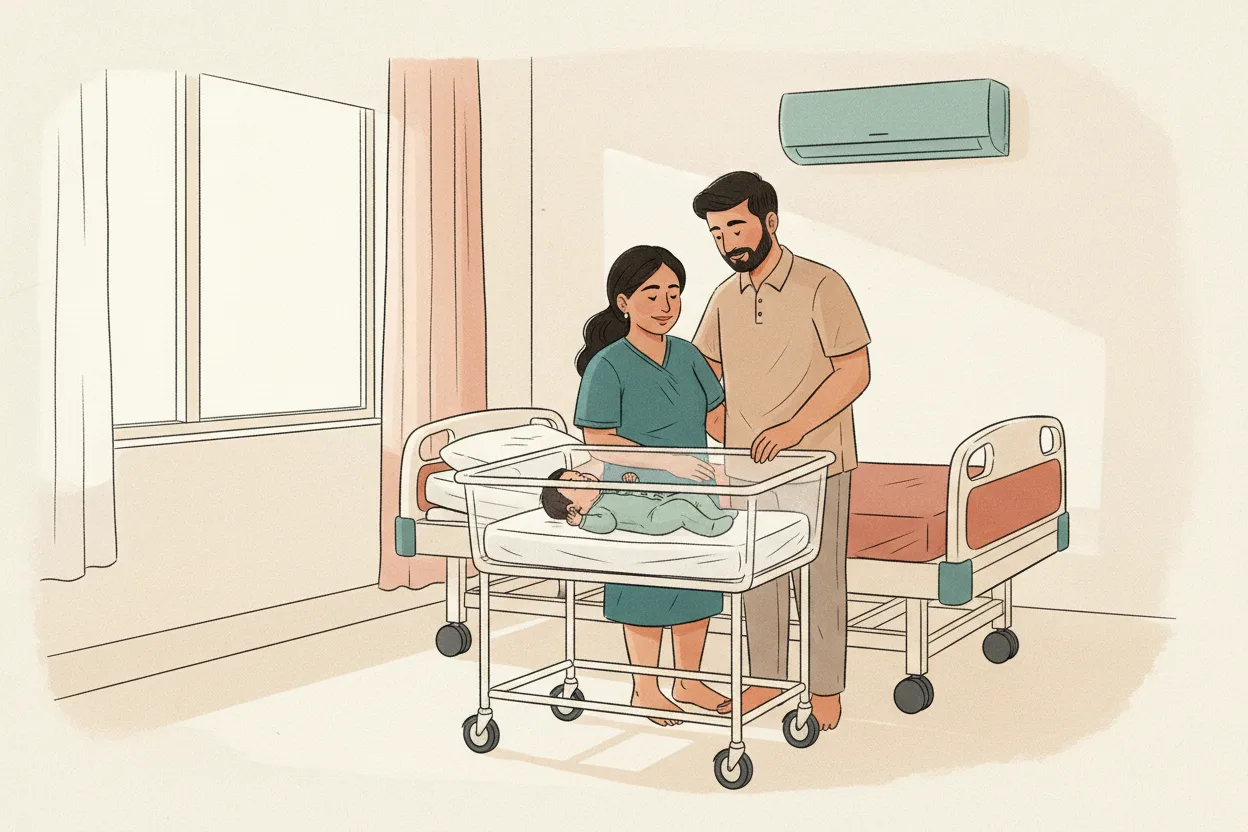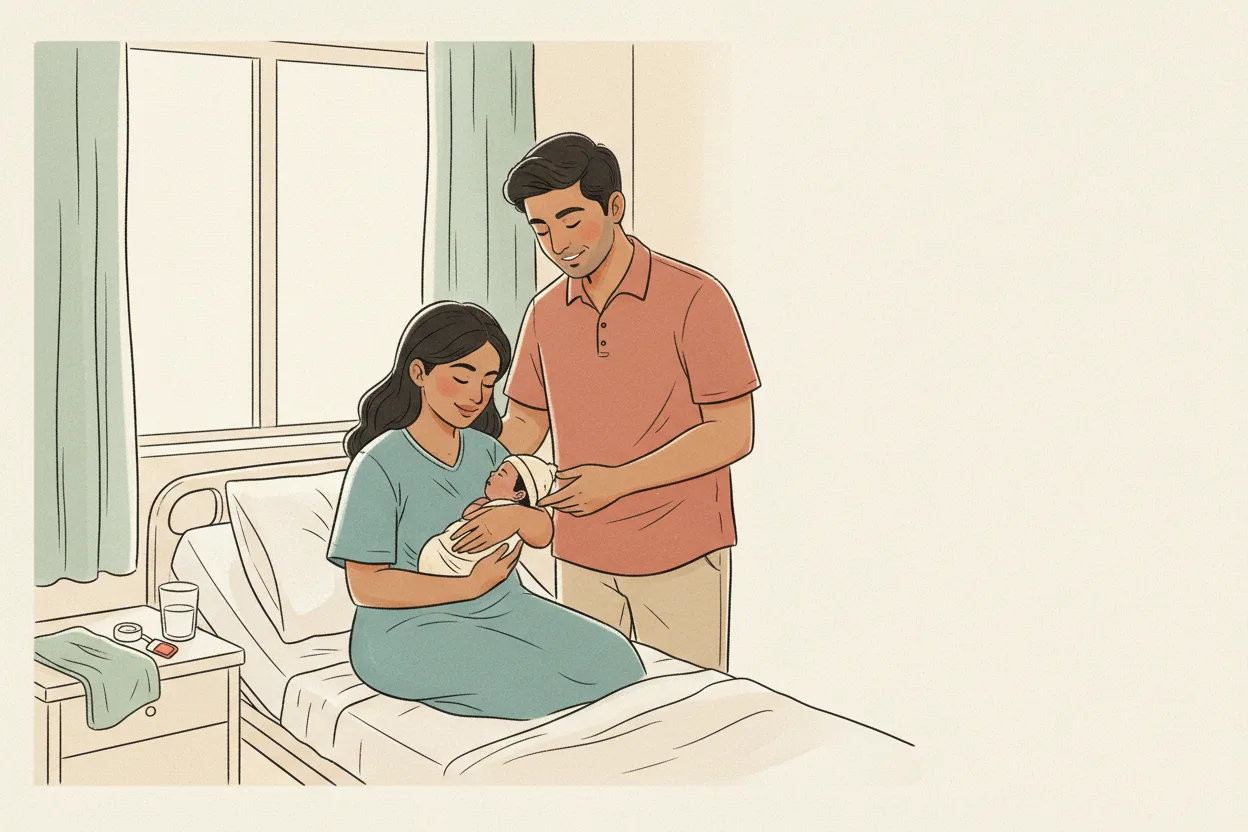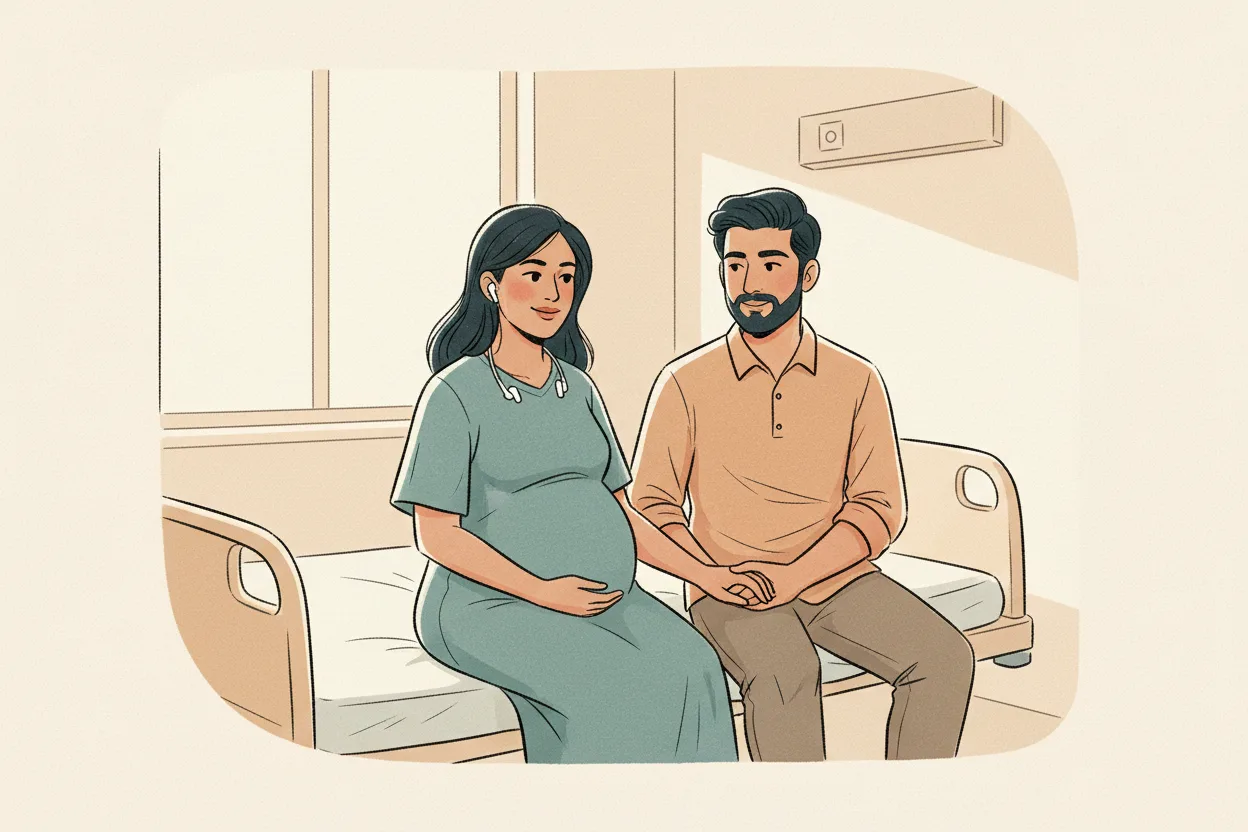
You already know the date and time. What actually happens between checking in and holding your baby is the part most parents feel unprepared for. A peer-reviewed study notes, citing ASA obstetric anesthesia practice guidelines, that patients undergoing cesarean section avoid solid food for 6–8 hours and liquids for 2 hours before anaesthesia is given — that's the one hard rule your hospital will hold you to. Everything else is about making the day feel less clinical and more like something you walked into prepared, together.
Not medical advice — follow your obstetrician's and hospital's specific instructions for your surgery date.
Why Planned Feels Different in India
A scheduled C-section removes the guesswork of labour, but it adds its own kind of nerves — you have days or weeks to think about a date on a calendar. In a joint or multi-generation home, that also means fielding a lot of advice and a lot of visitors planning around "the day." It helps to decide, in advance and together as parents, which family members come to the hospital, which stay home, and which one of you is the OT support person, so there's no negotiating that on the morning of.
Most private and government hospitals in urban India now follow the same anaesthesia, infection-control, and newborn-care protocols used globally — the differences you'll notice are more about visiting hours, room categories, and how many family members can wait on your floor, so it's worth asking your hospital's OT and maternity desk about their specific policies when you book your date.
The Night Before and the Morning Of
Your hospital will give you a specific fasting window, and it's not a suggestion — a peer-reviewed study notes, citing ASA guidelines, that patients avoid solid food for 6–8 hours and liquids for 2 hours before anaesthesia. Set an alarm for your last permitted sip of water rather than trying to remember it. Pack your bag the night before, charge your phone and earphones, and keep any comfort item (a soft dupatta, a small photo, a scent you find calming) in an outside pocket you can reach easily once you're gowned and gloved.
What Actually Happens in the OT
Once you're on the table, a few things happen quickly and in order. A peer-reviewed study on antimicrobial prophylaxis timing found that giving antibiotic prophylaxis before the skin incision, rather than after the cord is clamped, is well established at reducing infectious complications — so the antibiotic drip goes in before the first cut, not after baby arrives, and that's routine, not a sign of trouble.
If you're having spinal (not general) anaesthesia, most Indian hospitals will let you stay awake for the birth. WHO's intrapartum care recommendations state that a companion of choice is recommended for all women throughout labour and childbirth, cesarean included — ask specifically whether your hospital allows one support person into the OT under spinal anaesthesia, since the policy varies and is worth confirming before the day.
Ask, too, about immediate skin-to-skin contact. The WHO/UNICEF Baby-Friendly Hospital Initiative's global criteria state that in Baby-Friendly-certified hospitals, at least 80% of babies are placed skin-to-skin with the mother immediately or within five minutes of birth, and that contact continues unbroken for an hour or more unless there's a medical reason not to — under spinal anaesthesia, that's realistic even in the OT, so put it on your birth-preference list. It's also worth requesting for the first feed: a peer-reviewed study on skin-to-skin contact after cesarean section found that early breastfeeding initiation rates rose the longer skin-to-skin contact lasted, and that even a minimum of 30 minutes of contact — realistic on a busy ward — improved early and exclusive breastfeeding at discharge.
You can also ask your obstetrician about cord-clamping timing. A peer-reviewed study on term cesarean deliveries found that delaying cord clamping for 30–60 seconds during a cesarean improved the early hematological (blood and iron) status of term newborns, without increasing the need for phototherapy for jaundice — a small, well-supported request worth raising in advance.
Calming Techniques Hospitals Actually Allow
Earphones and a playlist are the easiest calming tool to bring — most Indian OTs let you keep them in until you're prepped, and sometimes through the procedure on spinal anaesthesia; ask when you pre-register. A meta-analysis of gynecological surgery patients found that listening to music significantly improved preoperative anxiety and postoperative pain. Build the playlist a few days ahead — slow, familiar songs work better than anything new, since the goal is steadying your breathing, not distraction.
Beyond music: a breathing pattern you've practiced (slow in for four counts, out for six), a photo of your partner or family propped where you can see it, and confirming your support person's role in advance so neither of you is improvising it in the moment.
Recovery Starts Sooner Than You Expect
Moving the same day sounds unlikely when you're still numb from the waist down, but it's the plan for good reason. A peer-reviewed review on reducing maternal deaths from blood clots states that early mobilisation, staying hydrated, and mechanical prophylaxis (like compression stockings) may significantly reduce the risk of dangerous blood clots after childbirth. Expect a nurse to have you sitting up within hours and taking a few supported steps by the next day — uncomfortable, but standard care; ask for help and pain relief before you attempt it.
Pain relief itself is usually planned, not left to you to request as an afterthought. A peer-reviewed review on post-cesarean analgesia states that a fixed, scheduled regimen of paracetamol and NSAIDs is preferable, built around a long-acting spinal opioid given at surgery, with additional oral or IV opioids (sometimes through a patient-controlled pump) kept in reserve for breakthrough pain. Ask your anaesthetist before surgery what your specific pain-relief plan will be, so you know what to expect rather than having to ask for something each time it hurts.
On discharge, the NHS states that most women can leave hospital 1 or 2 days after having a caesarean section. Indian hospitals generally work to a similar window for an uncomplicated, planned procedure, though your own doctor confirms the exact day based on your incision and recovery — pack for a two-night stay in case it runs slightly longer.
What to Pack for Surgery Day
| Item | Why it helps | Price Range (INR) | Where to Buy |
|---|---|---|---|
| Wireless earphones | For your pre-built calming playlist before and after prep | Rs. 800 – Rs. 3,000 | Amazon.in |
| High-waisted, soft cotton underwear (a few sizes up) | Sits above the incision line, won't rub the dressing | Rs. 300 – Rs. 800 | Amazon.in |
| Front-open nightgowns/kurtas | Easy skin-to-skin and feeding access without lifting your arms overhead | Rs. 500 – Rs. 1,200 | FirstCry |
| Compression socks | Comfort during early mobilisation on the ward | Rs. 300 – Rs. 700 | Amazon.in |
| Small Bluetooth speaker (low volume) | For the room afterward, if your ward allows it | Rs. 900 – Rs. 2,500 | Amazon.in |
Confirm ward rules on speakers and phone use with your hospital in advance — some general wards ask for headphones only, out of courtesy to other patients.
Frequently Asked Questions
Can I really eat or drink nothing on surgery morning? Follow your hospital's exact instructions, but the general rule per ASA guidelines is no solid food for 6–8 hours and no liquids for 2 hours before anaesthesia. Ask your team the night before exactly what time that means for you, and set an alarm for your last sip.
Will I be awake during the surgery? Most planned C-sections in India use spinal anaesthesia, so you're numb from the waist down but awake. General anaesthesia is used in specific situations your obstetrician will discuss with you directly — ask in advance which one is planned for your case.
Can my husband or partner be in the OT? Ask your specific hospital — policies vary. WHO recommends a companion of choice throughout childbirth including cesarean birth, and many urban Indian hospitals now allow one support person into the OT under spinal anaesthesia, but confirm it when you book your surgery date so there's no surprise at check-in.
Can I listen to music during the procedure? Ask your hospital when you pre-register — many allow earphones through prep and, under spinal anaesthesia, sometimes through the procedure itself. Music has been shown to reduce preoperative anxiety in gynecological surgery patients, so it's worth building a calm playlist either way, even if it's only for before and after.
How soon will I be up and walking? Sooner than feels possible — usually sitting up within hours and taking a few supported steps by the next day. Early movement after childbirth helps lower the risk of blood clots, so nurses will encourage it even though it's uncomfortable at first.
How many days will I be in hospital? Most women go home 1–2 days after an uncomplicated caesarean, and Indian hospitals generally follow a similar timeline — but pack for a slightly longer stay in case your doctor wants extra monitoring.