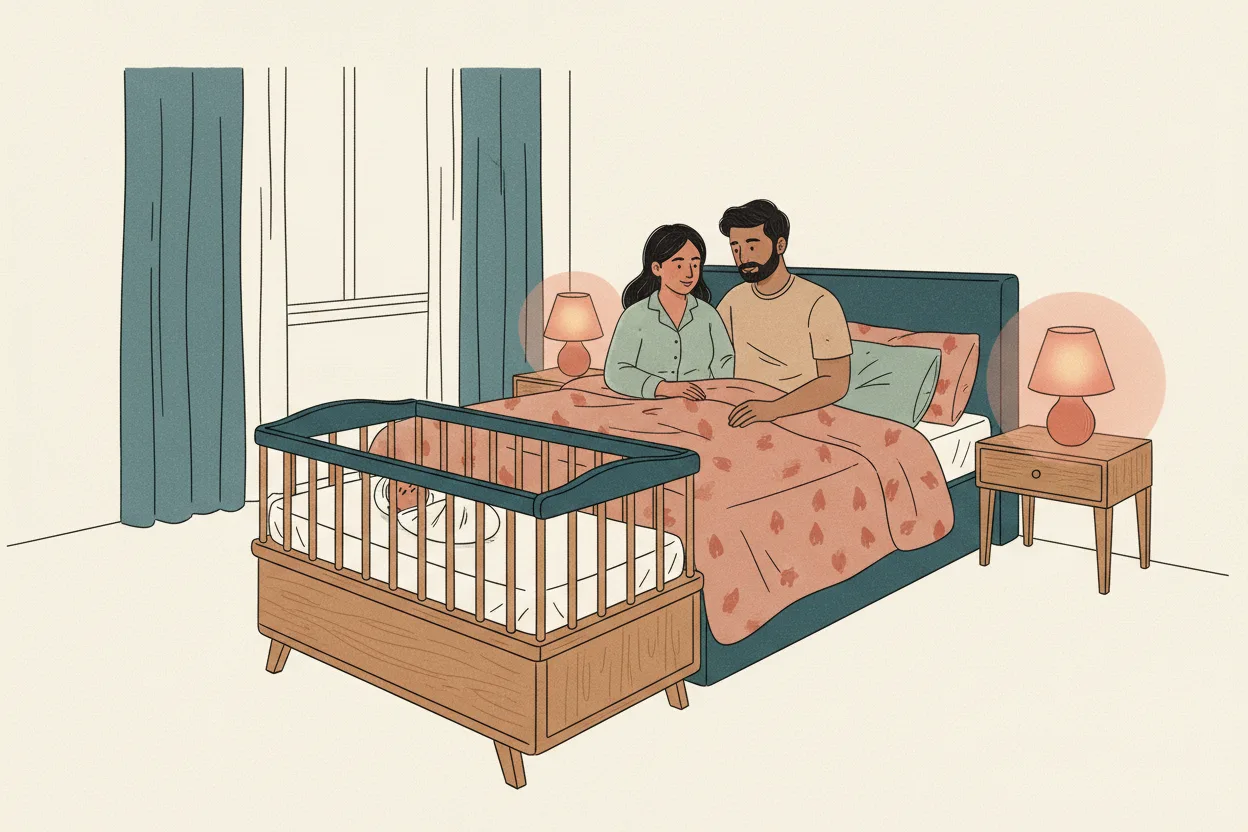


When grandparents or family friends living nearby drop in around 8 or 9pm — right when your baby should be settling down — the visit itself isn't really the problem. What undoes bedtime is the noise, the passing-around, and the excitement stacking on top of a day your baby is already tired from. Fix the timing and intensity of the visit, not the relationship, and the routine survives.
Not medical advice — consult your pediatrician if sleep problems continue.
Why the Pre-Bed Hour Is Worth Protecting
The AAP's Brush, Book, Bed program advises that regardless of a child's age, the key to a good bedtime is a predictable series of steps that helps them wind down from the day. That's the part an unplanned evening visit breaks — not because visitors are bad for your baby, but because the sequence your baby's body has learned to expect suddenly stops happening.
This isn't just a nice-to-have. A 2015 study in the journal SLEEP found that a consistent nightly bedtime routine is associated with earlier bedtimes, faster sleep onset, fewer night wakings, and longer overall sleep in young children. A routine that gets skipped or interrupted a few nights a week isn't a minor scheduling hiccup — it's the thing that was actually doing the work.
Why a Family Visit Overstimulates a Tired Baby
A grandparent or family friend arriving after their own long day naturally wants to play, bounce, sing, and get a smile — exactly the kind of high-energy interaction that HealthyChildren.org (AAP) advises can leave a child too excited to sleep afterward, since active play right before bed works against settling down. It isn't anyone's fault. It's simply the wrong hour for that kind of energy.
There's a physiological reason your baby feels this more than you do. A 2018 study in Physiological Reports found that melatonin suppression from evening light exposure was greater in children than in adults under the same lighting conditions. A living room with the main lights on, a phone camera flashing, and everyone crowding in to greet the baby is a much bigger jolt to your baby's system than it is to yours — even though the adults in the room feel perfectly relaxed.
Once it has already happened, the fix isn't to rush the crying, overstimulated baby straight into the cot. Raising Children Network advises that when a baby or toddler becomes over-stimulated before bedtime because of visitors, spending some extra calm time before bed winding down — away from the visitors — helps them settle. Budget for that recovery time rather than expecting bedtime to run on schedule the moment the door closes behind your guests.
Setting a Soft Cutoff Time — Without a Confrontation
A cutoff works best when it sounds like information, not a rejection.
Name the time, not the visit. Rather than asking relatives to arrive earlier in general, try: "Come by anytime before 7 — after that she's winding down and gets fussy." This reframes the ask around your baby's biology, which is much harder to argue with than a preference.
Send it before they leave home, not at the door. A short message earlier in the evening — "we're starting bedtime around 7:30, so a visit before 7 works best today" — gives family time to plan around it instead of feeling turned away mid-visit.
Use your partner as the buffer. If you're stuck cooking dinner and can't step away, this is exactly the job for the other parent, the one not at the stove. He can greet guests, keep the energy low, and give a heads-up that bath time is close — without you having to leave the kitchen or referee from across the room.
Give the visit a job, not just free rein. Grandparents often want to be useful, not just entertaining. Handing over the quiet part of the routine — a book, a bottle, sitting with the baby while you finish cooking — channels their visit into the wind-down instead of competing with it.
Protect the last 30 minutes as non-negotiable. The AAP recommends turning off all screens at least 60 minutes before bedtime — a useful, concrete line to hold even when relatives are still around. If a visit runs later than planned, screens (including phone photos and video calls to relatives) are the first thing to end, not the last.
| If the visit... | What to do |
|---|---|
| Ends before your cutoff | Proceed with the normal routine — bath, book, lights down |
| Runs past the cutoff but stays calm | Move straight into wind-down in the room with visitors present, keeping voices low |
| Was loud or ran late | Add 15–20 minutes of extra calm time, away from visitors, before starting the routine |
Sleep Foundation advises starting to wind down the household by dimming the lights and turning off screens in the lead-up to bed — a cue that works just as well when there are guests in the house as when there aren't. Dim the main light, put the phone away, and let your baby's body read the room correctly, whoever is sitting in it.
Why This Is Worth the Awkward Conversation
WHO's guidelines on sleep for children under 5 state that toddlers aged 1–2 years need 11–14 hours of good-quality sleep per day, including naps, with regular sleep and wake-up times — the "regular" part is exactly what repeated late, exciting evenings chip away at. One noisy visit isn't a crisis. A pattern of them, three or four nights a week, is what actually erodes a toddler's sleep schedule over months.
Setting a cutoff time isn't about limiting how much your baby sees their grandparents or extended family — plenty of daytime and weekend hours exist for that. It's about protecting the one narrow window each evening where your baby's body is asking for calm, and treating that request as seriously as you would treat a scheduled nap.
FAQ
Is it rude to ask relatives to visit earlier or leave by a set time?
Not if you frame it around your baby's routine rather than the relatives themselves. Most grandparents respond well to "she's winding down from 7:30" because it's specific and about the baby, not a comment on their visit.
My in-laws live in the same building and drop by unannounced — how do I set a cutoff without a scheduled visit?
Agree on a general house rule once, calmly, outside the heat of an actual evening — for example, "we keep the hour before her bedtime quiet, so pop by earlier in the evening if you can." A standing agreement removes the need to negotiate it fresh every single night.
What if the visit already overstimulated my baby and it's already close to bedtime?
Ease into the routine rather than heading straight into the cot. Spend a short stretch of calm, low-light time with just you and your baby before starting the usual routine, so their body has a chance to come down from the excitement first.
Does one loud, late evening actually harm my baby's sleep long-term?
An occasional exciting evening isn't something to worry over. It's a repeated pattern — several late, stimulating evenings a week — that's more likely to chip away at the regular sleep and wake times your baby's schedule depends on.
How do I hold the cutoff when I'm the one stuck cooking dinner and can't step away?
Loop your partner in before the visit starts, not during it — tell him what time bedtime begins and ask him to manage the room's energy and screens if you can't leave the kitchen. A visit that has one adult keeping things calm doesn't need the cooking parent to referee too.
Will my baby eventually get used to noisy evenings and stop being bothered by them?
Some babies do become more adaptable as they get older, but the wind-down routine itself remains the more reliable lever — a predictable sequence of calm steps works whether or not the evening around it was eventful.