
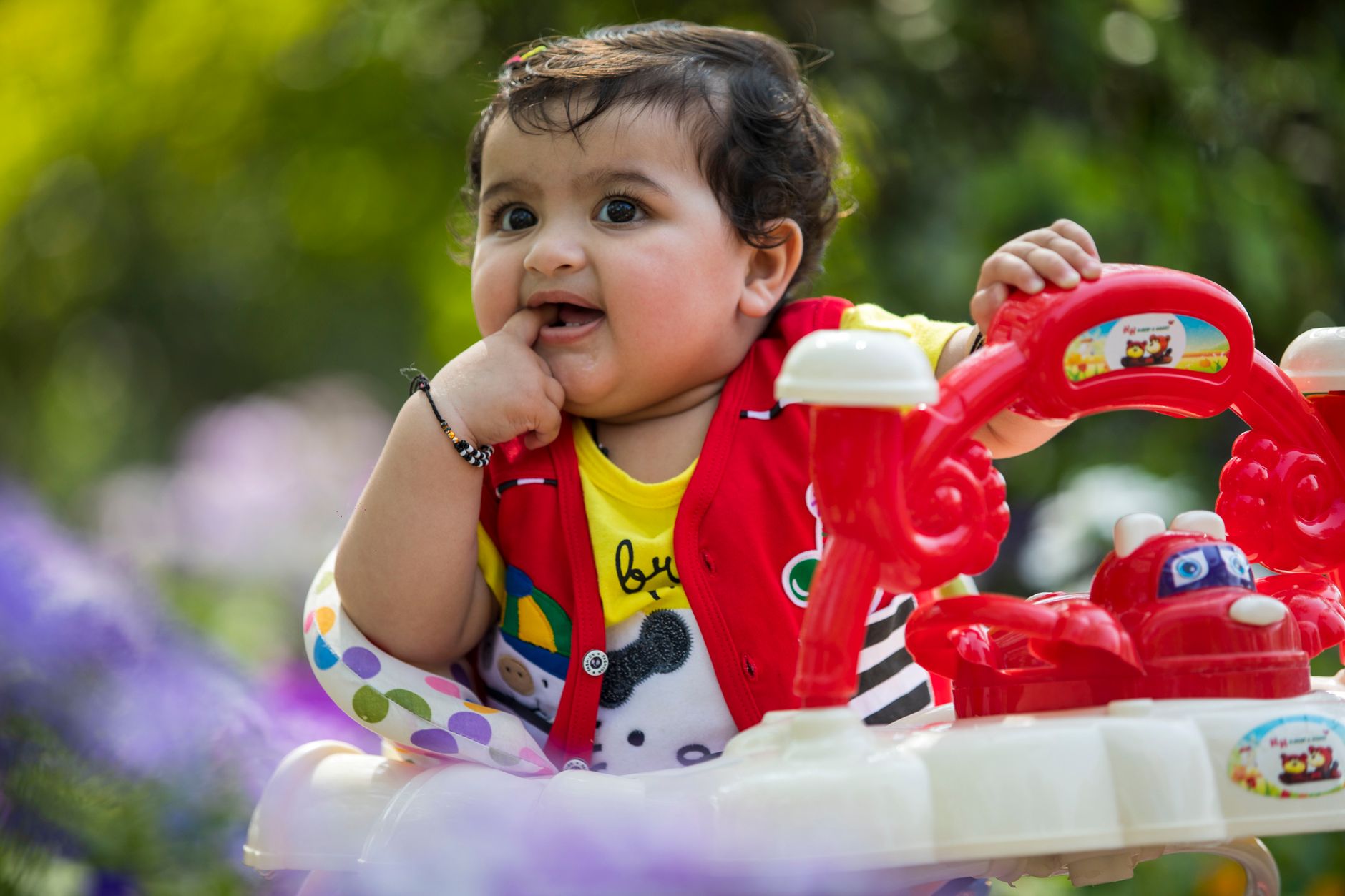
Teething causes pressure in a baby's gums, and biting helps relieve that discomfort — Cleveland Clinic explains. If your 4- or 5-month-old is gnawing on their fists and your mother-in-law keeps pulling their hand away, you can reassure her: this is exactly what a teething baby is supposed to do, not a habit to break.
Not medical advice — consult your pediatrician for concerns about your baby's teething, fever, or feeding.
Why "Stop Chewing Fingers" Is Outdated Advice
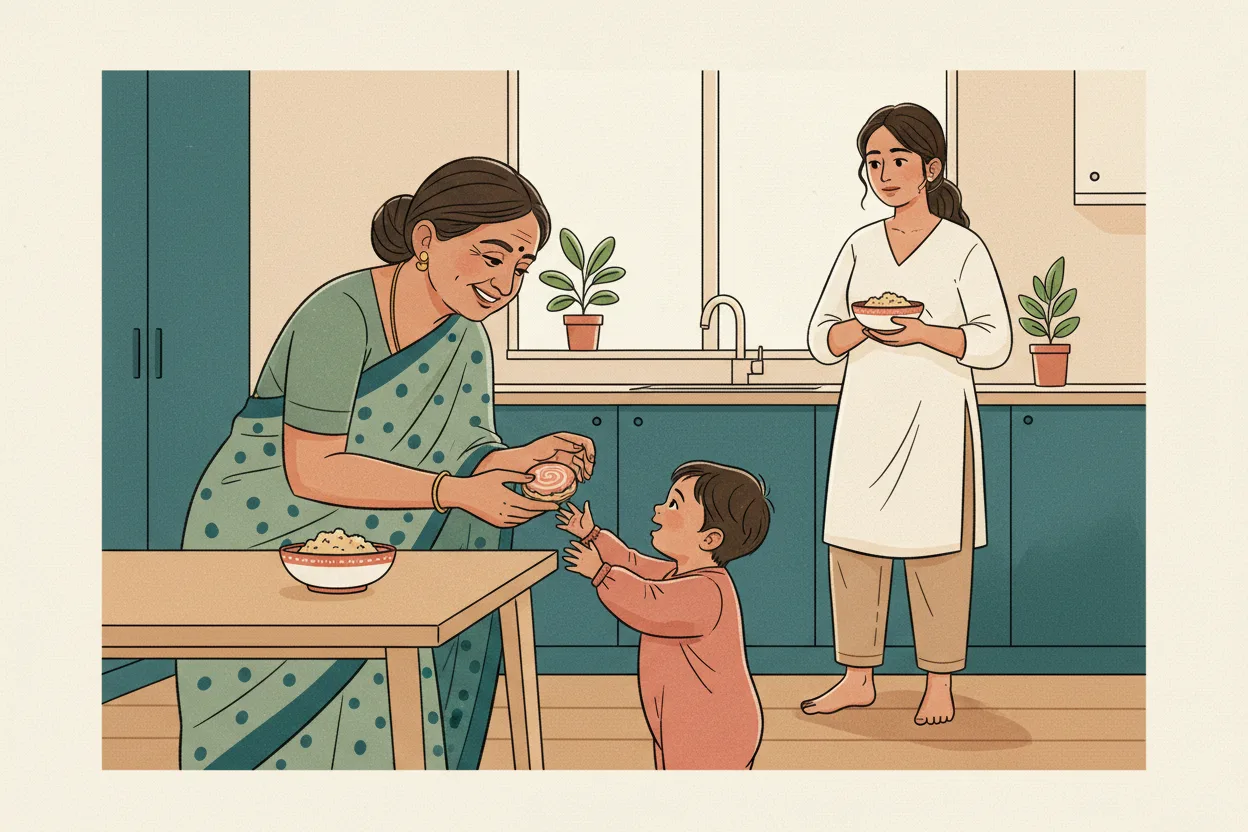
In many Indian homes, grandparents grew up hearing that constant hand- or object-chewing means a baby is picking up a "bad habit," being unhygienic, or heading for crooked teeth later. It's well-meaning, but it isn't how teething actually works.
As Cleveland Clinic explains, biting is how a baby relieves the pressure building in their gums — chewing on fingers, a teether, or a clean toy is the baby doing exactly what their body is telling them to do. The more useful response, for both parents, is to keep whatever baby is chewing on clean and safe rather than to stop the chewing itself. It also helps to have this conversation with grandparents together, as a united front from both of you, rather than leaving one parent to keep re-explaining it.
Is 4–5 Months Too Early?
No. Most babies start teething at around 6 months, but some start well before 4 months and others after 12 months, the NHS states. A baby gumming their fingers and drooling heavily at 4 or 5 months is well inside the normal range — not early, and nothing to worry your relatives with.
Is This Actually Teething?
It helps to know what teething does and doesn't look like before a relative jumps to a diagnosis. Besides drooling, the real signs are an increased need to chew and mild gum pain — teething does not cause fever, diarrhea, diaper rash, runny nose, or a lot of crying, the AAP's symptom checker states. If your baby has any of those other symptoms, it's worth looking past teething for the cause rather than waiting it out.
"But the Baby Has a Fever" — Is That the Teeth?
This is one of the most common flashpoints between new parents and grandparents: baby is teething and running warm, and the two get blamed on each other.
Teething can cause a slight rise in body temperature within the normal range, but research shows it does not cause a true fever, the American Academy of Pediatrics (HealthyChildren.org) states. If your baby has an actual fever, treat it as a sign of illness and call your pediatrician — don't wait it out on the assumption a tooth will explain it away.
What Actually Helps
Chilled teething rings. A teething ring can be chilled in the fridge, but should never go in the freezer, since an ice-hard ring can hurt a baby's gums, the NHS advises. Keep two or three in rotation in the fridge door so a cool one is always ready.
Clean fingers and firm silicone teethers. As above, gnawing on fingers or a firm, food-grade teether is a normal way for a baby to relieve gum pressure — no intervention needed beyond keeping hands and toys clean.
Cool, soft foods once baby is on solids. Once a baby is eating solids, cool soft foods like applesauce or yogurt, or a cold — not frozen — object like an apple, can help soothe teething discomfort, MedlinePlus (NIH) advises. Chilled mashed fruit or a mesh feeder works the same way for a baby who's already started solids.
What to Skip — Even If a Relative Insists
Amber necklaces and bracelets. These are common gifts from grandparents as a traditional teething remedy in Indian households. The AAP does not recommend that infants wear any jewelry, given the choking and strangulation risk a necklace or bracelet poses around a baby's neck or wrist. Accept the gift graciously if it's offered, then keep it stored away, entirely out of the baby's reach.
Teething gels and medicines. Teething gels and medicines containing benzocaine can be dangerous for babies — HealthyChildren.org (AAP) warns that studies have linked them to a rare but serious condition affecting how a baby's blood carries oxygen. Skip the gel counter at the pharmacy and reach for a chilled teether instead.
First Tooth, First Toothbrush
Start brushing as soon as the first tooth appears, using just a rice-grain-sized smear of fluoride toothpaste, and book baby's first dental visit by age one, the AAP (HealthyChildren.org) recommends. This is a good one to hand to whichever parent does bedtime — a quick brush, twice a day, especially after the last feed of the night, becomes part of the routine early.
Teethers Worth Buying in India
| Product | Price Range (INR) | Where to Buy |
|---|---|---|
| Food-grade silicone teething ring | Rs. 150 – Rs. 500 | Amazon.in / FirstCry |
| Multi-texture teether set | Rs. 300 – Rs. 800 | FirstCry |
| Infant finger toothbrush (soft silicone) | Rs. 100 – Rs. 350 | Amazon.in |
Skip anything strung as a necklace or bracelet, no matter how it's marketed or gifted — see above.
Frequently Asked Questions
My mother-in-law says biting fingers is a dirty habit and I should stop it. Is she right? No. Biting relieves the pressure that teething causes in a baby's gums — Cleveland Clinic explains this is normal, expected behavior, not a habit to break. Keep baby's hands and any teethers clean, and let the chewing continue.
Is 4 months too early for teething to start? No. Teething most commonly starts around 6 months, but a start before 4 months is within the normal range, per the NHS. Every baby's timeline is different, and an early start isn't a red flag.
Can teething cause a real fever? No — research shows teething does not cause a true fever, though it can cause a slight rise in temperature within the normal range, the AAP states. Treat any real fever as a sign of illness and call your pediatrician.
Relatives gifted an amber teething necklace — should baby wear it? No. The AAP does not recommend that infants wear any jewelry, because of the choking and strangulation risk. Thank the giver, and keep the necklace stored away instead of on the baby.
Is it safe to freeze a teething ring to make it extra cold? No. Never put a teething ring in the freezer, since it could damage baby's gums once it's frozen solid, the NHS advises. The fridge is cold enough — the freezer isn't necessary or safe.
When should we start brushing, and does baby need a dentist visit yet? Start brushing as soon as the first tooth appears, using a rice-grain-sized smear of fluoride toothpaste, and book the first dental visit by age one, the AAP recommends. There's no need to wait for more teeth to come in first.