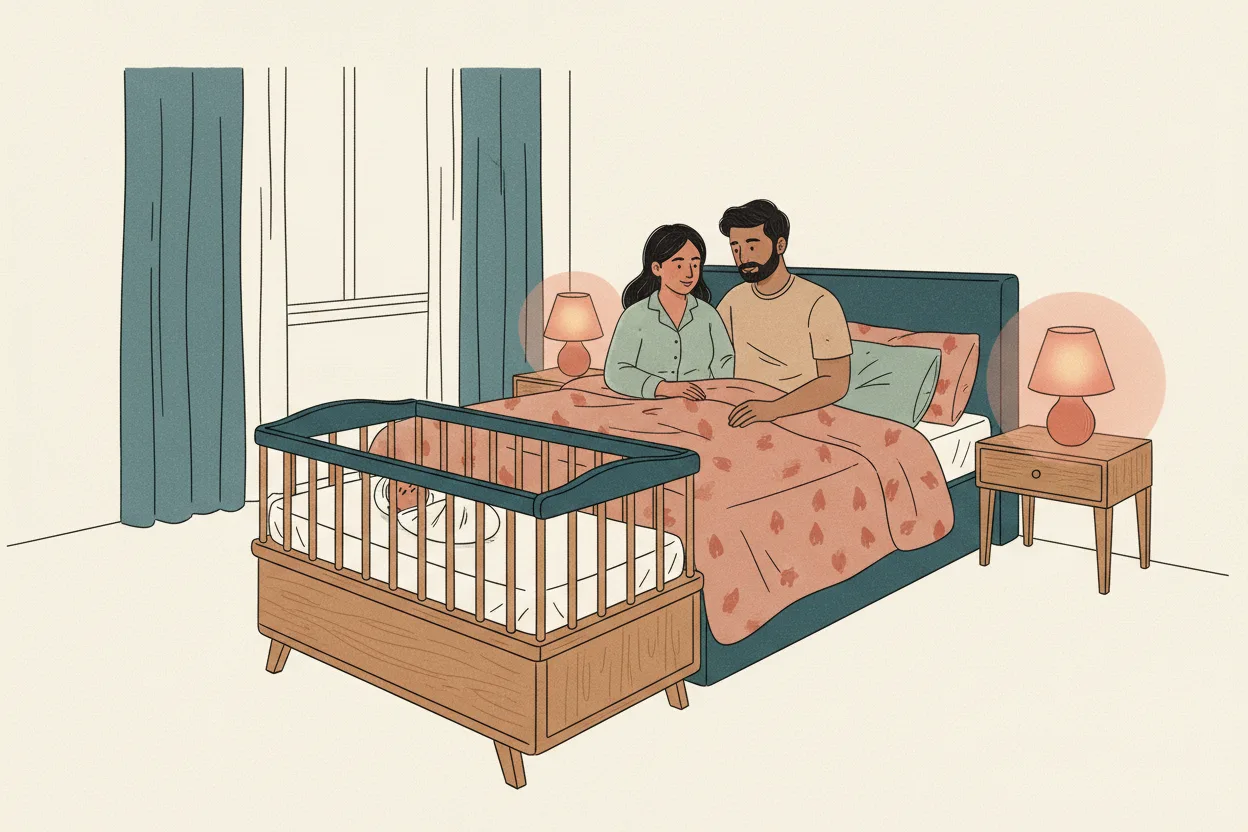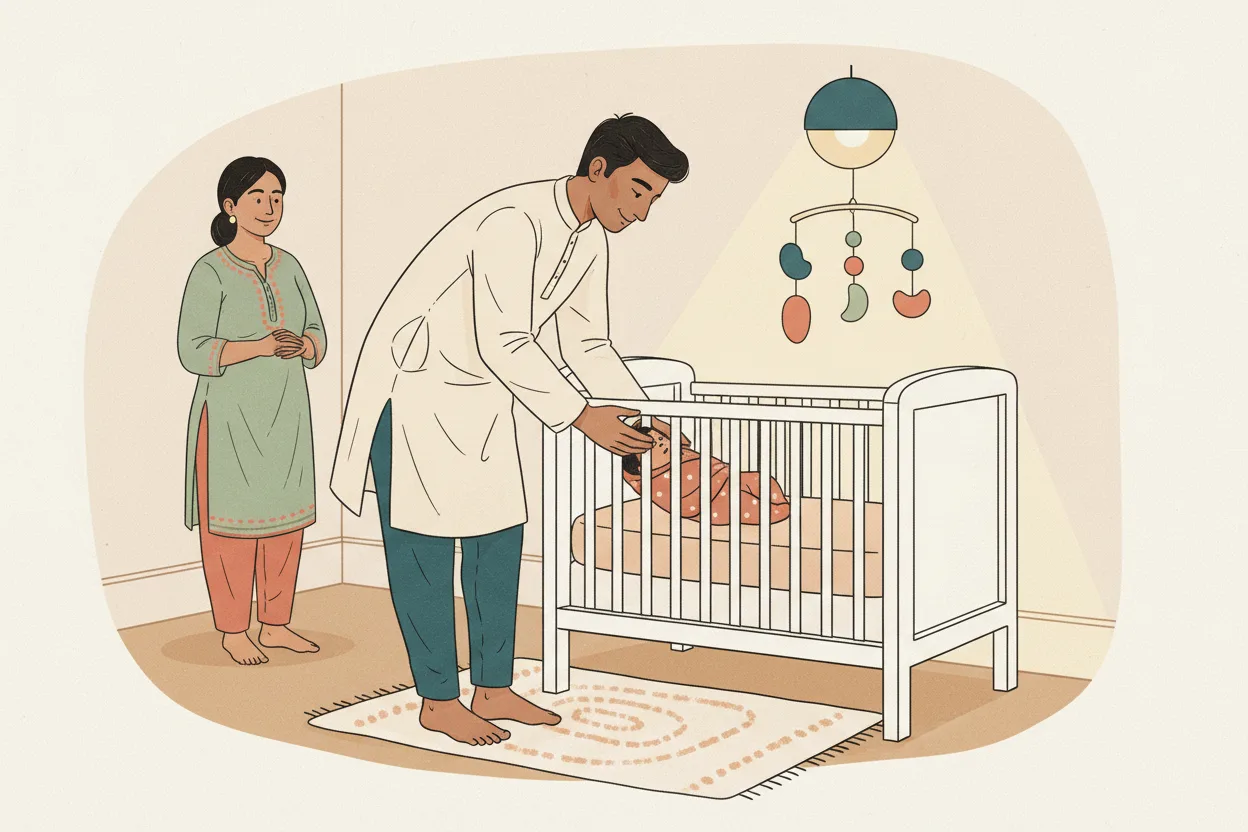


A rough couple of nights after your baby's shots is normal, not a sign something is wrong. HealthyChildren.org, from the American Academy of Pediatrics, explains that all vaccines can cause mild fussiness, crying, and restless sleep. For most babies it settles within a day or two.
Not medical advice — consult your pediatrician for guidance specific to your baby.
Why Vaccination Days Wreck the Night
Your baby got poked, their arm or thigh is sore, and their immune system is busy building protection — none of that makes for an easy bedtime. HealthyChildren.org notes that some babies also sleep more than usual for a day or two afterward, which is just as normal as broken sleep — every baby reacts a little differently.
The NHS advises that your baby may cry for a little while after a vaccination, but they should feel better after a cuddle. A feed, a cuddle, and your voice are usually enough to help them settle back down, even if it takes a few extra tries that night.
Zoom out and WHO is reassuring on the bigger picture: side effects are usually very minor and short-lived, such as a sore arm or a mild fever, and more serious reactions are possible but extremely rare. A few disrupted nights is a small, temporary price for that protection.
Vaccine Reaction or Sleep Regression? It's Often Both
Sometimes it isn't only the shot. Sleep Foundation explains that a sleep regression is a developmental phase where babies who were sleeping well suddenly start waking more often and struggle to settle back down — the 4-month mark is a common one, and it often lines up with a round of routine shots.
If your baby's rough patch started right around a vaccination appointment, both things can be true at once: a normal vaccine reaction on top of a developmental sleep regression. Neither one means you're doing anything wrong — a sleep regression usually resolves within days to weeks, and a vaccine reaction settles even faster.
| Signal | Usually a vaccine reaction | Usually a sleep regression |
|---|---|---|
| Timing | Starts within hours to a day of the shot | Can start any time, often around 4 months |
| Duration | Settles in 1–3 days | Can take days to a few weeks |
| Other signs | Sore, swollen injection site; mild fever | No injection-site soreness; more alert/active daytime |
| What helps | Comfort, feeds, time | Consistent routine, time |
What Actually Helps at Home
Extra cuddles and feeds. Per the NHS, a cuddle genuinely helps a baby who's crying after a shot feel better. Offering an extra feed or two in the 24 hours after vaccination is a reasonable, gentle response if your baby seems to want it.
Keep them on their back to sleep. Even during a rough patch, don't change how your baby sleeps. HealthyChildren.org recommends putting your baby on their back for every nap and every night sleep — a fussy, clingy evening is not a reason to make an exception.
Don't reach for paracetamol before you need it. It's tempting to dose your baby with paracetamol before the appointment "just in case." A 2013 clinical trial in BMC Pediatrics, via PMC, found that current recommendations support giving paracetamol to treat symptoms only, not for routine prophylaxis beforehand. Give it if your pediatrician has advised a dose for fever or discomfort after the shot, at the dose they've told you — not preventively, and not without their guidance.
Split night duty. A rough vaccine night is a good one to tag-team. One parent settles the baby while the other preps the next feed or simply gets a longer stretch of sleep, then you swap. There's no reason this needs to fall on one parent alone.
When to Stop Watching and Start Calling
Most post-vaccine nights are just tiring, not worrying. But a few signs mean it's time to call your pediatrician rather than wait it out. IAP's parent guidance is specific: call if your baby continuously cries for more than 3 hours and is inconsolable, or if they become unresponsive or limp, or have convulsions after a vaccine.
Keep your pediatrician's number and your nearest hospital's contact handy on vaccination days — most Indian clinics expect a call if something feels off, and there's no such thing as a silly question about your own baby.
Frequently Asked Questions
How many nights of bad sleep is normal after vaccination? HealthyChildren.org describes mild fussiness, crying, and restless sleep as a common, short-term vaccine reaction. For most babies, this settles within a day or two. If it's dragging on well beyond that, check in with your pediatrician.
Should I give paracetamol before the vaccination appointment to prevent a bad night? No. Research in BMC Pediatrics found that current guidance supports paracetamol to treat symptoms once they appear, not as routine prevention beforehand. Only give it after the shot, if needed, and at the dose your pediatrician recommends.
My baby wants to be held all night after their shots. Is that normal? Yes — the NHS notes that crying and needing extra comfort after a vaccination is common, and a cuddle genuinely helps. It's fine to hold and comfort your baby more than usual for a night or two; just put them down on their back, on their own sleep surface, once they're settled.
Can I still put my baby down on their back if they're fussy from the vaccine? Yes, and you should. HealthyChildren.org recommends back-sleeping for every nap and night sleep, with no exceptions for a rough evening. Comfort your baby, then settle them on their back once they're calm.
How is this different from the 4-month sleep regression everyone talks about? They can overlap. Sleep Foundation explains that a sleep regression is a developmental phase where a previously good sleeper starts waking more and resisting settling — separate from a vaccine reaction, though the timing often coincides since routine shots also fall around 4 months.
What symptoms after a vaccine mean I should call the doctor immediately, not just monitor? IAP's guidance flags three: crying continuously for more than 3 hours that you cannot console, the baby going unresponsive or limp, or convulsions. Any of these means calling your pediatrician right away, not waiting to see if it passes.